AI SEO: All You Need to Know – The E-commerce Guide

SEO for Online Stores in the Age of AI Mode and ChatGPT
Table of Contents
-
Introduction: AI Mode, ChatGPT, and the New Search Landscape
-
AI-Powered Search and E-commerce Traffic: How AI Overviews Affect User Behavior
-
SEO Fundamentals Remain Key: Technical Setup and Authority Signals in an AI World
-
Content Strategy for the AI Era: “Prompt-Friendly” Content and User Questions
-
Using AI Tools Wisely for Content Creation: Benefits and Pitfalls of GPT-Generated Text
-
Optimizing Product Pages vs. Informational Content: Balancing User Experience and SEO
-
Monitoring Your Presence in AI Search Results: New Tools and Tactics
-
Off-Site SEO and Digital PR in the Age of AI: Earning Mentions on Authoritative Sources
-
The Future of Online Shopping with AI: From Chat Assistants to Autonomous Agents
-
Conclusion: Adapting SEO with Human Expertise and AI Assistance
Introduction: AI Mode, ChatGPT, and the New Search Landscape
The past year has brought one of the hottest topics in digital marketing: the rise of AI-driven search results. Concepts like “AI mode” in Google Search and conversational answers from ChatGPT have stirred both excitement and anxiety in the SEO community. E-commerce owners are asking: Will AI search replace traditional Google results? How will customers find my store if AI tools summarize answers without clicking links?
At the outset, it’s important to stay calm. While these changes are real, they are evolving gradually, not overnight. We have time to adapt. Currently (November 2025), only a fraction of searches are impacted. For example, Google’s experimental AI overview (the generative answer summary at the top of search results) appears for roughly 20% of queries. And those tend to be broad informational questions – the kind that marketers and tech enthusiasts often test. For the vast majority of everyday users and queries, the traditional search results page (SERP) still looks and works as it always did. In other words, the sky is not falling.
That said, change is underway. Within the digital marketing industry, it can feel like the world is turning upside down – new AI features, announcements about models like OpenAI’s GPT-4 or Google’s upcoming Gemini, and search engine experiments are coming fast. This article will demystify what these AI modes mean for SEO, specifically for online stores, and provide a roadmap for how to adjust your strategy. We’ll cover how AI-enhanced search results work, how they might divert (or create) traffic, and concrete steps to keep your e-commerce site visible. Crucially, we’ll maintain a professional, practical tone – this is about adapting SEO, not throwing out the rulebook entirely. In many ways, success still comes down to quality content, solid site optimization, and understanding your customers’ needs, even as the interface for delivering answers evolves.
Along the way, we’ll also address some common questions that online retailers and SEO specialists have raised: Should you install a GPT-based chatbot on your own site? (Does it help SEO or conversions?) How do you handle AI-generated content – is it “good enough” or will Google penalize it? Do you need to worry about mysterious files like LLM.txt or other ways to prevent AI from scraping your content? And what about all those ads on social media promising “#1 visibility in ChatGPT answers” – are they legit or snake oil? By the end of this article, you should have a comprehensive understanding of SEO for e-commerce in the age of AI and chat-driven search, and a clear idea of how to position your store for the changes ahead.
AI-Powered Search and E-commerce Traffic: How AI Overviews Affect User Behavior
First, let’s clarify what “AI mode” means in search. Google’s Search Generative Experience (SGE) – often dubbed AI overview – is an experimental feature where the search engine uses a large language model (LLM) to compose an answer at the top of the results page. Instead of just links and snippets, the AI overview provides a few paragraphs of synthesized information, with citations linking to source websites. Similarly, Bing Chat and ChatGPT (with browsing enabled or via plugins) can answer questions by pulling information from web pages. In markets like Poland, Google has been testing these AI summaries (hence “AI mode”) for users who opt in. The key for online stores: these AI answers may answer users’ queries directly, potentially reducing clicks to websites (the classic “zero-click search” problem, now in AI form).
However, current impact on e-commerce is limited. The statistics speak for themselves: only about 1 in 5 Google searches triggers an AI-generated answer at the moment. And those tend to be general knowledge questions or broad research (“What are the benefits of running?” or “How to choose a mountain bike?”). If someone searches a specific product query – e.g. “Samsung Galaxy S21 128GB price” – the AI might not generate a long answer, since a simple list of search results or a shopping ad is more straightforward. In fact, many product and transactional queries currently do not show AI summaries. The AI overview is biased toward informational, long-tail questions that have answers aggregated from multiple sources.
For online store owners, this means the core of your organic traffic (people searching for products or buying keywords) is likely still coming through traditional results. If you sell niche aquarium supplies, a query like “buy external canister filter XP300” will probably show normal results (with perhaps some shopping ads), not an AI essay. On the other hand, queries like “how to clean a canister filter” might trigger an AI overview that mentions some brands or sources. So one immediate takeaway is to categorize the types of searches relevant to your business: - Transactional queries (product names, “buy product”, “product price”, etc.): Currently less affected by AI summaries. Users will still see your title tags, meta descriptions, rich snippets, etc. in the SERP. - Informational queries related to your niche (“how does product work”, “best product for need”, “product vs product”). These are increasingly likely to show AI-generated answers, especially on Google’s experimental search or Bing.
It’s the informational searches where you’ll want to pay special attention. These queries often top the funnel – they’re the questions potential customers ask before deciding what to buy or where to buy it. In the past, capturing these with blog posts or guides was a great SEO strategy to build awareness. Now, you may find that Google’s AI overview attempts to answer those questions on the spot. For example, a user asks, “What are the best running shoes for flat feet?” The AI mode might produce a paragraph recommending certain features or even specific shoe models, with links to sources (maybe Runner’s World, or a podiatry blog, etc.). If your site had a blog article targeting that question, it might have ranked on page 1 before; now it could be one of the sources cited under the AI summary – which is helpful, but the user might not click through if the answer already satisfies them.
Does this mean informational content is no longer valuable? Not at all. It means the bar for visibility and usefulness has been raised. In the short term, only a subset of users are even seeing these AI results (those in the Google Labs program, for instance). And many users still scroll past the AI box to the traditional results, especially if they want to double-check sources or see a variety of opinions. In fact, to the average searcher, the AI overview is just another featured snippet – useful, but not always complete. Moreover, AI answers include citations. If your content is good enough to be referenced, you still gain exposure. Some users do click those source links to get the full context.
Another angle to consider is Bing’s AI chat and direct chats like ChatGPT. Bing’s chatbot (and others like NeevaAI before it shut down) can engage in dialogue about products. For example, a user might ask Bing Chat, “What’s the best coffee maker under $100?” and get a conversational answer with footnotes linking to review sites or retailer pages. If you’re not one of those sources, you miss out. Meanwhile, ChatGPT with browsing might pull info from a variety of sites but doesn’t yet directly link out in the free version. And ChatGPT’s non-browsing mode or other LLM-based assistants rely on their trained knowledge (which might include content from 2021 or earlier). In those cases, if your site has authoritative content that was part of the training data, the AI might “know” about it – but it won’t cite you or send traffic your way. This raises the stakes for branding and authority (more on that later). If the AI has absorbed general knowledge about, say, “features to look for in a vacuum cleaner”, it will regurgitate that without needing to quote anyone. But if a user asks for current specifics or products, the AI will often defer to live data and sources.
Bottom line: AI-powered search is currently an adjunct to traditional search, not a replacement. It’s most active in the informational realm. E-commerce sites should continue to create and optimize content for those informational queries (since they influence purchasing decisions), but you must be savvy about how to earn a place in the AI-generated answers. The sections below will delve into how to do that – from ensuring your content is structured for AI to read, to leveraging the fact that we’re still in an early phase where many competitors haven’t adapted. You’ll also see that core SEO practices – fast, crawlable sites with authoritative content – are as critical as ever. In fact, they form the foundation that even the fanciest AI cannot ignore when selecting what information to present.
SEO Fundamentals Remain Key: Technical Setup and Authority Signals in an AI World
With all the buzz about new AI search features, it’s easy to overlook a reassuring fact: the fundamental building blocks of SEO have not changed. No matter how advanced the search interface, Google and other engines still need to crawl, index, and evaluate your site’s content. If anything, ensuring a solid technical foundation is even more important, because any weaknesses (like poor crawlability or unclear site structure) might cause the AI not to “see” your content at all when formulating answers.
Here’s a checklist of technical SEO and authority basics that every online store should have covered in the age of AI (and which were equally important before):
-
Crawlability and Indexing: Make sure nothing in your robots.txt or meta tags is inadvertently blocking search engines (and by extension, AI systems) from accessing your content. In the context of AI, there’s been talk about a special LLM.txt or similar files to control whether AI models can use your site content. As of now, these are not standardized or reliably honored. The speakers in the webinar noted that *American tech giants aren’t too concerned with whether you “want” your content read or not – if it’s publicly accessible and not explicitly blocked, their bots will likely use it. So your best bet is to keep important content open to crawlers. (If you have truly sensitive data you don’t want AI or search engines to use, consider putting it behind a login or paywall – more on that later when we discuss protecting intellectual property.)
-
Site Speed and Mobile Optimization: These remain crucial for user experience and therefore SEO. AI-driven search results might eventually factor in page performance (for example, if an AI agent is choosing which site to send a user to for more details, it might favor a fast, well-optimized site to ensure the user has a good experience after clicking). In any case, Google’s algorithms (core web vitals, etc.) still reward fast sites, and users appreciate speed whether they come via traditional search or an AI suggestion.
-
Structured Site Architecture: A clear hierarchy of categories, products, and informational pages helps search engines understand your site. This in turn can influence AI results. For instance, if the AI is answering a question like “How do I fix issue X with Product Y?”, and your site has a well-structured support article or FAQ on that, it’s more likely to be picked up. Use logical URLs, breadcrumb navigation, and a sensible linking structure so that crawlers (and users) can traverse your site easily. Later in this article, we’ll talk about internal linking strategies, especially around content clusters – that’s an extension of this principle.
-
Meta Tags and Descriptions: There was a period in SEO where some meta tags (like meta keywords or even meta description) were thought to be obsolete. While it’s true that meta keywords are ignored by Google and meta descriptions don’t directly influence rankings, you should still craft a good meta description for human readers on the SERP. Why? Because even if an AI summary appears, some users will scroll to the normal results. A compelling meta description can entice a click if the AI snippet didn’t fully satisfy them. Moreover, if your page is among the sources an AI overview cites, a well-written meta description might be used in link previews. The webinar speaker noted that the industry had a moment of thinking meta descriptions didn’t matter, but in practice, they remain a useful element of search appearance【17†meta】. At the very least, ensure your pages have relevant titles and descriptions – they form the first impression in any kind of search result.
-
Authority and Backlinks: Search algorithms – and likely AI answer algorithms – heavily weigh a site’s authority. One major authority signal is the quality and quantity of backlinks pointing to your site. This hasn’t changed. Without link building, you won’t rank – as plainly stated, “bez linkowania nie ma pozycji” (“without linking, there is no ranking”). An e-commerce site that publishes great content but has zero other sites linking to it will struggle to be seen as an authority in classic SEO, and similarly, an AI model might not regard it as a prominent source. Continue to pursue ethical, high-quality link building: for example, outreach to get your products reviewed by bloggers, contributing expert insights to industry publications (which earns you mentions and links), listing your business in reputable directories, etc.
-
It’s worth noting that the webinar speakers stressed the ongoing importance of links even in the AI era. They highlighted that while the mechanics of AI answers differ from a ranked list of links, the AI is still likely to rely on authoritative sources. Backlinks remain one of the best proxies for authority. So a page with excellent content and strong backlinks has a double advantage: it might rank well in regular search and be a top candidate for inclusion in AI-generated responses.
-
Brand Mentions and Online Reputation (Digital PR): In addition to classic “blue link” backlinks, unlinked brand mentions and overall reputation play a role. The AI systems have read a large portion of the internet. If your brand is frequently talked about in a positive light (say on forums, news articles, social media), the AI “knows” that. One pro tip from the speaker: now is a good time to revive traditional PR efforts – essentially, get your brand name out there in authoritative contexts. This might involve sponsoring an industry report, being a guest on podcasts, or collaborating with influencers – anything that creates buzz and mentions of your store as an authority. The more the AI sees your name associated with expertise or quality, the more weight it may give to your site’s content. In the webinar, they jokingly said to “sprinkle a pinch of PR” on your SEO strategy – more mentions that you are an authority can only help.
-
On a related note, the speakers also advised not to ignore author pages and author reputation on your site. If you have blog posts or articles, consider having a real person (with credentials) listed as the author, and build their authority as well (Google’s E-E-A-T: Experience, Expertise, Authoritativeness, Trustworthiness guidelines favor content with clear, credible authorship). While an AI summary might not display the author name, the underlying algorithm that decides which content to trust could be influenced by it.
In summary, think of technical SEO and authority as the bedrock. Any fancy AI-driven changes are built on top of the existing index of the web. Make sure your site is technically sound and reputable. This way, whether a user interacts with a classic search result or an AI assistant, your content has the best chance to be discovered and deemed trustworthy. The next sections will build on this foundation, focusing on content strategy and the specific adaptations needed to make your content AI-friendly.
Content Strategy for the AI Era: “Prompt-Friendly” Content and User Questions
“Content is king” has been an SEO mantra for years, and it remains true in the AI era – but the type of content and how you present it may need to evolve. The webinar introduced a concept called “prompt-friendly content.” This refers to content tailored to answer the kind of questions users pose to AI chatbots and voice assistants. In essence, it’s about understanding user intent more deeply and structuring your information in a way that an AI can easily digest and relay.
Here’s how to adapt your content strategy for optimal impact:
-
Identify the Key Questions in Your Niche: Start by researching what questions potential customers are asking, especially in conversational form. These might be queries like “What’s the best gaming laptop under $1000?”, “How do I style a denim jacket for winter?”, or “Is product X compatible with product Y?”. Think beyond single keywords – think in terms of natural language questions and problems your audience has. Tools and techniques for this include:
-
Using your own site search data or customer service inquiries.
-
Exploring forums, Reddit, Quora, or Facebook groups related to your industry (people often ask questions in these spaces that they might also ask an AI).
-
Keyword research tools that provide question phrases (many SEO tools show queries with words like “how”, “what”, “best”, “why”, etc.).
-
The webinar speaker mentioned their tool offers “mnóstwo sugestii pytań, które użytkownicy wpisują do czatów” – a plethora of suggested questions users type into chats. Even if you don’t have that exact tool, you can simulate it by thinking of likely follow-up questions around your products.
-
Create Content that Directly Answers Those Questions: This sounds obvious, but it’s a shift in mindset from old-school SEO where you might write a general article and hope it covers the keyword. Now, be explicit and direct. For example, if users ask “How do I install this car seat correctly?”, consider having a dedicated blog post or video on that exact question. Use the question as a headline or subheading. Google’s AI and other LLMs often look for content that is structured as Q&A or at least has a clear answer portion. By including the question phrased naturally in your content, you signal relevance. One strategy is to create an FAQ section on relevant pages, where you pose the common question and then answer it in a few sentences – that snippet could be perfect for an AI to pick up.
-
Provide Clear, Concise Answers Up Front: Attention spans are short, and AI summaries tend to grab the most pertinent information early in the text. You should structure your content in an inverted pyramid style – give the most important answer or conclusion first, then provide details or explanation. For instance, if the article is “How to choose running shoes for flat feet”, the opening lines might say: “For runners with flat feet, the most important features in a shoe are XYZ. The top-rated models in this category are A, B, and C, according to podiatrists.” Then you can delve into what flat feet are and why those features matter. The key is that an AI scanning your article might only use the first few sentences for its summary – make those count. The experts noted not to leave the crucial answer for the last paragraph (a common mistake in essay-style writing); instead, lead with the answer.
-
Use Headings and Structured Formatting: Break your content into logical sections with descriptive headings. This isn’t just for human readers – it helps the AI figure out the content. For example, use an H2 or H3 heading that is a question, like “How do I clean a leather sofa?”, followed by the answer steps in text or a list. If the AI is looking for an answer to that exact question, it can easily find that section. Additionally, use bulleted or numbered lists for steps, tips, or product lists when appropriate – these often get extracted for “list-style” answers. (Be mindful, however, of a quirk the speaker mentioned: sometimes AI will include markdown formatting cues like numbered steps or horizontal rules if it lifts content that way. We’ll cover cleaning those up in the next section on AI-generated text. When you create content, just format normally – the AI will handle it, and formatting helps humans.)
-
Ensure Depth and Uniqueness: While brevity for answers is important, you also want your content to be comprehensive and unique overall. The webinar pointed out that some content areas online are full of shallow, “SEO content” – these are ripe for being outperformed by even AI-written text. If you have such content (thin, generic articles that don’t add anything new), they may not survive the AI answer curation. Meanwhile, highly competitive content areas (like popular tech topics, medical advice, etc.) already have lots of excellent content, so to stand out there you need something new – new data, a novel insight, a more up-to-date example, etc.. Essentially, ask yourself: “If an AI is scanning 100 articles on this topic, what unique value does mine offer?” It could be original research, an expert quote, a local insight, or even just a clearer explanation. The AI tends to synthesize common denominators from sources, but if your content has a standout point that others don’t, that’s the kind of fresh contribution that might make the AI favor your text (or at least include a hint of it with a citation). The speaker theorized that AI algorithms likely compress multiple sources and look for “new, fresh information” that wasn’t widely available. That fresh info often comes from expert human authors rather than rehashing existing web content. So aim to be the source that adds a nugget of insight the AI can’t get elsewhere easily.
-
Update and Refine Existing Content: Many businesses have older blog posts, guides, or product descriptions created years ago for SEO. Don’t let these collect dust. The rules of the game have changed a bit, so it may be time to audit and refresh those pages. The speakers noted that they even go back to content created with clients 5-10 years ago and re-optimize it for today’s context. What might this entail?
-
Adding relevant questions as headings (as discussed).
-
Reordering content so that the answer isn’t buried.
-
Incorporating recent information or updates (so the content is timestamped with freshness, which AI might consider).
-
Improving internal linking among related pieces (if you have multiple articles on similar topics, make sure they reference each other in a meaningful way – more on internal links soon).
-
Enhancing readability with images, bullet points, and examples.
-
Crucially, checking if any parts were AI-generated (perhaps you experimented with AI writing in the past) and ensuring they meet your quality standards. There was a warning: pages that look obviously auto-generated can fail to index or rank. If you find older pages that read like they were machine-written and not polished, definitely fix them (or consider removing them if they add no value).
-
Internal Linking and Topic Clusters: As you build out content answering various niche questions, organize them into content clusters. For example, if you run an online cycling gear store, you might have a cluster around “bike maintenance”: one article for “How to tune your bike’s gears”, another for “Best ways to clean a bicycle chain”, another Q&A on “When to replace your bike tires”, etc. These individual pages should all interlink with each other and with a more general “hub” page (perhaps a main guide to bike maintenance). The webinar highlighted this strategy: a main page passing authority to subpages, and subpages linking back to the main page and to each other where relevant. This web of internal links with keyword-rich anchor text helps search engines (and AI algorithms scanning your site) understand that these pages are related and cover a broad topic comprehensively.
-
For instance, ensure that your product pages link to related informational pages (“Learn how to choose the right size – see our helmet fitting guide”) and vice versa (“Ready to buy? Check out our selection of road helmets”). Internal links are like signposts that give context. The speakers called each anchor text and link “another informational signal” to the algorithms. A rich internal link structure can boost your chances of multiple pages from your site being used as sources for AI answers, and it definitely boosts traditional SEO by improving user navigation and spreading link equity.
-
Also pay attention to anchor text – instead of linking with generic text like “click here”, use descriptive phrases (“road bike maintenance tips”) that indicate the content of the target page. Every bit of clarity helps the AI discern the relevance of your pages.
-
Visual Aids and Enhanced Content: While AI tools primarily consume text, don’t forget about images, infographics, and videos for human users. If a user clicks through to your site from an AI recommendation, engaging visuals can keep them there and lead to conversions. Moreover, if you create infographics or charts, sometimes those get picked up or summarized by AI (and at the very least can earn you natural backlinks when people share them). There is also the possibility that in the future, AI search results might incorporate images (for instance, Bing’s AI already can show images in answers). So having original, well-captioned images on your informational pages could be a plus. For example, an AI answer might say “(See image below from YourSite* )” – where it actually uses your infographic to illustrate a concept. This isn’t mainstream yet, but it’s wise to think ahead.
-
Quality Over Quantity (Avoiding Filler): One trap to avoid is thinking you need to flood your site with hundreds of thin articles to cover every possible question. Google’s algorithms (and by extension AI summarizers) have gotten very good at detecting fluff and duplication. A concise, authoritative piece will outperform a dozen low-value pages. In the webinar Q&A, someone asked if AI-generated texts are valuable to Google; the answer was, essentially: valuable content is valuable, garbage is garbage. If you just prompt ChatGPT to spit out a generic 500-word article and slap it on your site, that’s likely “śmietnik internetu” – the trash of the internet, and neither Google nor users will find it worthwhile. But if you use AI or any method to produce truly helpful, specific content, it will be valued. The best strategy is to spend time making your content genuinely useful and unique. Not only will this rank better, it’s more likely to be referenced by others (earning backlinks) and cited by AI answers.
To illustrate prompt-friendly content, imagine an example from an online furniture store. Old approach: a blog post titled “How to Arrange Furniture” with a long intro about the importance of interior design, maybe the post eventually gives some tips in paragraph form, and it’s vaguely targeting a keyword. New approach: create a post titled “How Should I Arrange Furniture in a Small Living Room?” – specific question form. In the first paragraph, answer directly: “In a small living room, start by placing your sofa against the longest wall, keep pathways clear, and use multi-functional pieces (like an ottoman with storage). Aim to create a focal point around one piece (like a TV or coffee table) and arrange seating to face it.” That’s a solid quick answer. Then use subheadings to elaborate: “Use of Corners and Vertical Space”, “Choosing Multi-functional Furniture”, “Example Layouts” – each giving more depth. Maybe include a diagram of a sample layout. Also link within this article to your product category pages (e.g., a subtle plug: “A wall-mounted shelf can help utilize vertical space.”). This page would be very useful to a user, likely rank well for that query, and if Google’s AI overview is answering “How to arrange furniture in a small living room?”, it might incorporate tips from your article (with a citation) because you structured it to match the question.
In summary, adjust your content creation to be user-question-centric and AI-friendly. Write the kind of content that you can imagine being read out by Alexa or summarized by ChatGPT – that means clear questions and clear answers, with depth behind them. By doing so, you’re not just catering to algorithms; you’re actually improving clarity for all your readers. After all, even human visitors appreciate when you get to the point and then provide supporting info as needed.
Now that we’ve covered creating content, the next section will discuss something related: when and how to use AI tools to generate content for your site, and how to avoid common pitfalls of AI-written text (like odd formatting or detection by search engines).
Using AI Tools Wisely for Content Creation: Benefits and Pitfalls of GPT-Generated Text
With the explosion of tools like ChatGPT, many businesses have started using AI to help write product descriptions, blog posts, and other content. This can be a huge productivity boost – if done correctly. However, it’s not as simple as copy-paste. As we’ve touched on, raw AI-generated content often needs human editing and finesse. In this section, we’ll explore how to leverage AI for writing while maintaining (or improving) quality, and we’ll highlight some subtle pitfalls like “AI fingerprints” in text that you should remove.
The benefit of AI writing tools: They can help you generate a draft quickly, overcome writer’s block, and even provide ideas or outlines. For an online store, AI might help create a starting description for a new product based on specs, or produce a list of bullet-point benefits. It can also translate or rewrite content in different tones (useful if you serve multi-language markets or want to adjust formality). In the webinar, the experts acknowledged they too use AI tools in their content workflows. The key phrase was “używać czata jako dobrego narzędzia, które pomaga ci pisać. Kropka.” – “use the chatbot as a good tool that helps you write. Period.”. In other words, AI is a means to an end, not the end itself.
Here are best practices for using AI in your content creation:
-
Use AI for Inspiration and Efficiency, Not Final Copy: Treat the AI’s output as a first draft or an assistant’s notes. You (or a content editor on your team) should review and polish it. AI can produce the basic text, but it won’t necessarily know your brand voice, specific product nuances, or the exact emphasis you want to make. Always fact-check AI-generated content; these models can sometimes produce incorrect statements (the phenomenon of “hallucinations”). Especially for technical or safety-related content, verify any claims or instructions. The human touch ensures accuracy and alignment with your brand values.
-
Edit Out AI “Fingerprints”: One of the fascinating insights from the webinar was how to spot text that was likely generated by AI and why that matters. AI models (like GPT) often insert certain characters or formatting that a human writer typically wouldn’t. Examples include:
-
Typographic Quotation Marks: ChatGPT often outputs “curly” quotation marks (“” or ‘’) and apostrophes by default, whereas a human typing in a simple editor might use straight quotes or a consistent style. The presence of perfectly styled opening and closing quotes in places like meta descriptions or older CMS fields could tip off that the text was auto-generated. It’s not that curly quotes are bad – in fact, typographically they’re correct – but it’s about consistency and not mixing styles. Ensure your site’s text has uniform quote characters. If an AI has used a different type than your usual content, replace them. One clue from the Q&A: most human-typed Polish content uses the standard keyboard dash and straight quotes, whereas AI might use en-dashes/em-dashes and typographer’s quotes. Align these to your standard.
-
Em Dashes and Hyphens: The speakers humorously talked about the “mythical hyphen” – how AI tends to use longer dashes or a certain spacing around hyphens that stand out. For instance, ChatGPT might produce something like “–” (en dash or em dash) where a human might use a simple “-”. They mentioned you can search Google for strings of text with those characters to find AI-generated content because people don’t usually write that way. When you use AI-generated content, normalizing dashes (and other punctuation) to match your typical style can remove this telltale sign. Use a text editor to find and replace unusual characters (e.g., replace em dashes with hyphen-minus if appropriate, or vice versa, just be consistent).
-
Excess White Space or Invisible Characters: AI outputs sometimes include extra spaces or newline characters that aren’t obvious until you look at the HTML or use “show hidden characters” in a text editor. For example, there might be double spaces after periods, or non-breaking spaces in odd places. These “white spaces” can be problematic – at best they add nothing, at worst they could prevent proper formatting or indicate copy-pasting issues. Clean them up. A quick way is to use a tool or plugin that strips out double spaces, zero-width spaces, etc. The speakers specifically flagged white space anomalies as a very bad sign, because they are invisible but can mess with how text is parsed.
-
Markdown Artifacts: As noted, models like ChatGPT have a tendency to format content in Markdown. This means if they wanted a horizontal line, they might output a sequence like --- on a separate line (which renders as a horizontal rule in Markdown). In plain text on your site, that could just show up as three dashes. Similarly, they might output **bold** or titles like ### Summary: if prompted a certain way. Make sure to remove or convert any of these. The Q&A pointed out one easy tell: ChatGPT often adds triple dashes between sections. A human writer rarely puts --- between paragraphs. If your pasted content has those, delete them (or use them properly as horizontal dividers in HTML, but generally they’re not needed).
-
Repetitive Phrasing and Structure: AI-generated text can be too formulaic. For instance, it might start multiple paragraphs with similar phrases or produce a list where each item starts the same way (“First…”, “Second…”, “Third…” consistently). Humans tend to vary language more. While this isn’t a “technical fingerprint” like a weird character, it’s a style giveaway. For SEO purposes, it can also make content less engaging. So, edit for a more natural flow. The speakers mentioned how some patterns like “Podsumowanie:” (“Summary:”) as a heading or “Krok 1: …, Krok 2: …” (“Step 1:, Step 2:”) are used by AI quite often. They’re not bad per se, but if every AI-written article on the web has a “Summary:” heading and yours does too, it’s not helping you stand out. If it makes sense for the content to have a summary, keep it, but rewrite in your tone (“In summary, …”).
-
Test Indexing and Adjust if Needed: A very interesting observation: pages with unedited AI text often fail to index at all. The speakers have seen cases where people copied AI content directly onto their site and Google just didn’t index those pages (perhaps the content was detected as AI and considered low-value, or was duplicate of other AI content out there). By contrast, when they took the time to lightly rewrite or “clean” the AI content, those pages indexed fine. This indicates that Google’s algorithms (or maybe its AI detectors) do look for patterns or exact matches that suggest auto-generated content. This doesn’t mean you can’t use AI – it means you should run any AI-written text through a human “quality filter.” Even small tweaks can differentiate it. The goal is to have content that reads as if a knowledgeable human wrote it, because ultimately you want it to truly be helpful.
-
Use AI to Augment Human Expertise, Not Replace It: The optimal workflow might be something like: you (the human) decide on the content outline and main points (especially any unique insights you have). You then ask AI to generate a portion of it, or expand a bullet into a paragraph. Then you edit that, maybe add an example or case from your experience, remove any fluff, and finalize. This way the content benefits from both the efficiency of AI and the authenticity of human expertise. The speaker put it nicely: using AI can give you “superpowers” to do more and better, but it’s up to the user to get value from it. A hammer is only as good as the carpenter swinging it – likewise, AI is a tool, and you are the strategist and quality controller.
-
Avoid Over-automation and Duplication: If you use AI to generate lots of similar content (for example, 100 product descriptions that are only slightly different), be cautious. Ensure each page has something distinct. If the AI ends up producing very similar phrasing across those pages, you might inadvertently create duplicate content issues or simply pages that add no unique value. It might be better to have one excellent page about “Best laptops under $1000” than 10 pages each focusing on a different price point if they all say roughly the same things. Always ask, “Is this page providing something unique compared to what's already on my site (or others)?” If not, maybe consolidate it or enrich it until it does.
One might ask, how does Google feel about AI-generated content? Officially, Google’s stance has evolved to “we care about the quality of content, not how it’s produced” – they even said using AI is not against guidelines as long as the content is helpful. However, if AI content is low quality or used to manipulate rankings without value, that’s against guidelines (same as any low-quality content). In practice, by editing and improving AI drafts, you’re ensuring the content is high quality.
Also, consider an analogy given in the Q&A: Relying solely on AI without experience is like being a guinea pig for the chatbot’s suggestions. You don’t truly know if its SEO advice or content is good until you try – at the risk of your site. An agency or experienced SEO professional has likely tried similar things with other clients and already learned what works or fails. So if you’re not sure about how to handle AI content, it can pay to consult with experts or at least do small-scale tests. There’s a place for human expertise in guiding how AI is used (we’ll talk more about the role of agencies vs AI in a later section).
Quick tip: One of the webinar’s tips was that they built an in-house tool to “clean” AI text of unwanted markers. Even if you don’t have that, you can mimic it. After getting AI content: - Copy-paste it into a plain text editor (to strip formatting). - Use find/replace for things like double spaces, “ ” quotes to " " if needed, long dashes to standard hyphens, etc. - Look for any odd characters or broken lines. - Then paste into your CMS and format properly (headings, lists). It’s a bit of extra work, but it could be the difference between Google considering your page spammy vs valuable.
In summary, using AI in content creation is a game of balance. Embrace the efficiency – you can get a lot more done with its help – but do not sacrifice quality. Always review and polish what the AI gives you. If you treat AI content as finished work, you risk publishing mediocre or problematic text that users and search engines will ignore. If you treat it as a starting point, you can harness its power while ensuring the final output is up to your standards. Remember, the ultimate judge is the user: if the content reads well, provides accurate info, and serves their needs, it’s a win – whether an AI helped write it or not.
Next, we’ll shift from content creation to a more specific area for e-commerce: how to handle product pages and other on-page SEO elements in this new environment, including the perennial issue of duplicate content and product descriptions.
Optimizing Product Pages vs. Informational Content: Balancing User Experience and SEO
For online stores, product pages are your bread and butter. These pages have a different purpose and structure than your blog articles or buying guides. A key question in the AI age is how much to optimize product pages for SEO (and potentially AI) without harming the user experience. Also, how do product pages interplay with the informational content we’ve been discussing?
Product pages should primarily serve the shopper. When someone lands on a product page (whether from search, an AI recommendation, or an ad), they are usually further along the buying journey. They want to see if the product fits their needs: the price, specs, photos, reviews, and so on. They do not want to read a wall of SEO text about general knowledge on the product. Historically, some e-commerce sites would put a long block of keyword-stuffed text at the bottom of category or product pages (e.g., a mini essay about “The history of widgets and how to choose the best widget”), hoping to rank for those terms. In most cases, that’s not effective anymore – and it can be counterproductive by cluttering the page.
From the webinar insights: - The experts do not consider product descriptions the most critical element for SEO right now. They emphasized that product pages have a specific role: to describe the product succinctly and accurately, and to convince the customer. That’s it. You want unique content there to avoid duplicate issues, yes, but you don’t need to turn product pages into exhaustive guides – leave that to your blog or dedicated info pages.
-
Keep product descriptions reasonably short and unique: Write enough to cover the product’s features, benefits, and any important usage info, but don’t write an entire novel. The speakers humorously noted that nobody wants to read 10,000 characters about a simple item like bottled water or a computer mouse. Overloading product pages with text can deter users. Instead, aim for a clear, scannable format: a brief intro line, bullet points of key specs or unique selling points, and maybe a sentence or two of additional context if needed. If you find yourself writing paragraphs of background or tips, consider moving those to a blog post or an FAQ section and just link to it.
-
Avoid manufacturer duplicate content: One absolute must – your product descriptions should not be copy-pasted from the manufacturer (or from another retailer). That kind of duplicate content can hurt you in search rankings (Google may filter your page out in favor of whichever site it sees as the original or more authoritative). Always rewrite descriptions in your own words and style. This also applies to using AI: if multiple stores use AI on the same manufacturer text, they might all end up with very similar phrasing. Add a unique angle if possible (e.g., highlight a use case or a specific benefit that others don’t mention). The webinar suggested ensuring products are described in a “unikalny sposób i bez błędów” – a unique manner without errors. This indicates quality control; sometimes manufacturer descriptions contain jargon or even mistakes – fix those.
-
Basic on-page SEO for products: Make sure each product page has a descriptive, unique title tag (usually the product name plus maybe a category or model number), and a meta description that might include a selling point or two. Use appropriate headings on the page (the product name as an H1, then perhaps smaller headings for “Description”, “Specifications”, “Reviews” etc., if you have sections). Use product schema markup (more on schema later) so search engines know it’s a product with a price, availability, etc. All this helps both traditional SEO and potentially AI – if an AI is scanning your page to answer something, it will easily find structured info like price or dimensions if you clearly label them or use schema.
-
Let informational pages carry the heavy content load: The webinar advice was that all the extensive content, topic coverage, and Q&A we discussed earlier should live on dedicated informational pages (blog, guides, knowledge base), not on the product page itself. Use those pages to funnel readers to products. For instance, if you have a long article about “How to pick the right laptop for gaming,” that article can link to some gaming laptop product pages. The product pages themselves can remain concise – they can even link back to the article like “Need help deciding? Read our laptop buying guide.” This way, you cover the informational intent on content-rich pages and keep the product pages focused.
-
Category pages and topic clusters: Category pages can sometimes rank for broader terms (e.g., “men’s running shoes”). You might wonder, should I put content on category pages? The speakers mentioned you can treat category sections as part of a cluster – for example, having a well-written introduction on a category page can help, especially if you link between the category and relevant guide pages. Many sites put a short SEO paragraph at the bottom or top of category pages. There’s no hard character limit – it’s more about usability. If it’s at the top and too long, it may push products down (bad for users). If it’s at the bottom, users might miss it (but search engines will see it). A compromise: keep any category page text brief and directly useful. For example, a category page for “LED Televisions” might have a one-liner up top: “Find the latest 4K LED TVs – compare by size, brand, or smart features below. Need help? Scroll down for tips on choosing the right TV.” Then at bottom, you could have a short block: “How to Choose an LED TV: When selecting a television, consider resolution (4K is now standard for sharp images), screen size relative to your room, and smart TV capabilities. Our collection features top brands like Samsung and LG, known for reliability and picture quality. [Read our full TV buying guide] for more details.” This is just an example; the idea is to include some relevant keywords and helpful info without overwhelming the page. They noted no fixed “limit of characters” for category descriptions** – it’s more about what users will tolerate and where to place it.
Also, if category pages don’t make sense for long text, use blog posts or landing pages as the content hubs. The webinar gave an example with IdoSell (a platform) allowing either a blog format or “informational pages” that are interlinked with categories. The tactic is flexible: you can make a separate page called “Best LED TV Buying Guide” and link to it from the category, rather than forcing the entire guide onto the category page.
-
User Experience is Paramount on Product Pages: Always ask, if I were a shopper, what would I want on this page? Likely: clear product images, specs, price, availability, reviews, shipping info. Not a lecture. Google also knows this – they have algorithms to detect if content is hidden way below or if users quickly leave a page. If a product page is too bloated, it might have higher bounce rates or slow load times, which can indirectly hurt SEO. Keep them lean and mean.
-
E.A.T for product content: Even on product pages, consider elements that build Trust. This includes up-to-date reviews, maybe badges like “Authorized Dealer” or any trust seals, and clearly stating your expertise (e.g., having a snippet of “About Us” or “Why buy from us” can sometimes help). Now, one might wonder how AI handles product pages. In current AI overviews, sometimes they will list products or mention a particular model if the query is about “best X”. If your site is cited, it might be the informational content being cited. But in the future, AI chatbots might directly guide users to purchase (“This product from Shop A fits your criteria”). For that to happen, the AI needs structured and confidence-worthy data from your product page. This loops back to having good schema markup (like price, stock) and possibly participating in any feeds or integrations (like Google Merchant Center for organic product listings, etc.). We’ll touch on structured data next.
To illustrate with an example: Suppose someone asks an AI, “What’s a good smartphone for under $300?” The AI might give a short list of models and basic reasons. It might cite sources like a tech review site. Now, if your e-commerce site has a blog post titled “Top 5 Smartphones Under $300 (2025 Edition)” and your post is thorough, that could be a source. Inside that post, you of course link to your product pages for each phone. The product pages themselves might not be directly cited by the AI (unless maybe you have a lot of user reviews on them and the AI learned from those), but they are where the user should land if they want to buy. So in practice, your informational page captures the AI traffic, then funnels the user to the product page where they convert. This underscores the strategy: keep product pages conversion-focused and let content pages handle broad questions.
One more point: On-site search and chatbots. The Q&A portion had a question: “Should we implement GPT-based chatbots on our product pages? Does it affect SEO?” The answer was: It doesn’t affect SEO directly, and yes, it can be worth implementing for user service.. A chatbot that helps users find products or answers their questions on your site can improve the user experience (leading to better engagement, possibly more sales). But having it or not has no direct impact on your Google rankings. So you can explore AI chatbots as a customer support tool or guided selling tool on the site without fear – just treat it as separate from your search optimization strategy. It’s more about improving conversion rate and customer satisfaction. For instance, an AI chatbot on a product page could answer “Will this TV fit on a 32-inch stand?” – that’s great for the user deciding to buy. It won’t, however, make your page rank higher on Google simply because the chatbot is there.
In summary, segment your content by intent: - Product and category pages: Optimize for conversions and basic on-page SEO. Unique concise descriptions, proper tags, schema, reviews – and good UX. - Informational pages (blog, guides, FAQs): Optimize for engagement and SEO visibility. These carry the bulk of content that both Google’s ranking algorithm and AI systems will evaluate for providing answers. Use them to draw visitors in and then lead those visitors to the relevant products.
By doing this, you satisfy both kinds of users: those ready to buy (who get a streamlined product page) and those researching (who get rich content that also points them toward your products when appropriate). And you make it easy for search engines and AI to know which pages to serve for which purpose.
Now, a crucial technical aspect that’s increasingly important for AI (and SEO in general) is structured data. Let’s delve into that next.
Leveraging Structured Data: Speaking the Language of AI
Imagine two websites: one has a product page where the price, availability, rating, and other details are just written in a paragraph; the other marks up those details with clear tags (schema markup) indicating “this is the price”, “this is the product name”, “here’s a review rating of 4.5 out of 5”, etc. To a human reader, both pages might look similar. But to an AI or search engine, the second page is much easier to interpret. This is where structured data (also known as schema or microdata) comes in.
Structured data is a standardized format to label information on your site so that search engines (and any other machine, like an AI assistant) can better understand it. For e-commerce, common schema types include Product, Offer (for price/availability), Review and Rating, FAQ (for Q&A content), Article, BreadcrumbList, and so on.
Why is this important in the age of AI? The webinar speakers gave a compelling vision: in the future, “machines will talk to machines” more directly. Instead of parsing text like a human, AI agents could query sites in a structured way (“What’s the price of X at this store? Is it in stock?”) and expect structured responses. We’re already seeing early steps – for instance, Google’s Knowledge Graph and Shopping results rely heavily on structured data. Alexa’s answers or Google Assistant’s actions often use structured data to retrieve specific facts. The speakers believe that the significance of structured data is moderate now but will grow massively.
Key points and tips on structured data for e-commerce SEO and AI:
-
Implement Product Schema on all product pages: This is a no-brainer for any online store. Use JSON-LD (the recommended format) in your page HTML to mark up product name, description, SKU, brand, price, currency, availability (InStock, OutOfStock, etc.), and any aggregate rating if you have reviews. Most modern e-commerce platforms or plugins can generate this for you, but it’s worth double-checking. You can use Google’s Rich Results Test or Schema Markup Validator to ensure it’s correctly done. By doing this, you enable rich search results (like showing star ratings or price in Google results) and you make it easier for AI to pull accurate data. For example, if someone asks an AI, “What’s the price of the Nike Air Zoom Pegasus shoes on StoreX?”, if you have structured data, the AI doesn’t have to scrape your page and guess – it can find the price in the schema snippet reliably. Even if AI isn’t doing that today for every query, it’s likely moving in that direction. In short, structured data feeds the machine knowledge.
-
Use FAQ Schema for common questions on your site: If you have an FAQ page or even a Q&A section on product pages, consider adding FAQPage schema. This can sometimes get you rich snippets in Google (expanding FAQs under your result) and it directly provides a question-answer format that an AI might ingest. For instance, if your product has a Q: “Does this laptop support USB-C charging?” and A: “Yes, it supports USB-C charging up to 60W.” marked up properly, Google’s AI overview or Bing might directly use that. The structure screams “this is a question and here is the authoritative answer from the source.”
-
Article/BlogPosting Schema for your content pages: Mark up your blog posts and guides with the appropriate schema (title, author, date published, etc.). This helps establish context and can also tie into Google’s understanding of authors (especially if you supply author and publisher info). If an AI is evaluating trust, knowing the article has an author with a name and maybe a sameAs link to a bio or LinkedIn could be useful. It’s not proven that AI uses schema for credibility yet, but it can’t hurt to follow best practices.
-
Local Business Schema (if applicable): If you have physical store locations, adding LocalBusiness or Organization schema with your business details can help you be part of relevant answers (for example, if someone asks “Where can I buy X near me?”, AI might cross-reference product availability with local business info). Also, it’s just good SEO to have – it can enhance your presence in local search and maps.
-
Breadcrumb Schema: E-commerce sites often use breadcrumbs (Home > Category > Subcategory > Product) for navigation. Marking this up with BreadcrumbList schema helps Google display breadcrumbs in results instead of a long URL, and gives AI a sense of your site hierarchy. It’s an easy win – many platforms have this out of the box.
-
Ratings and Review Schema: If your site hosts customer reviews, use Review or AggregateRating schema in tandem with Product schema. This not only can get you those star ratings in Google results, but also signals the sentiment and helps AI understand qualitative aspects. An AI answer might not yet say “This product has a 4.5-star rating based on 120 reviews” – but one day it might. If you provide that data in structured form, you make it easy for such usage (with appropriate caveats – the AI should cite or attribute, hopefully).
-
Keep Structured Data Up-to-date: One caution: structured data must be accurate. If your schema says InStock but the product is actually sold out, that discrepancy could not only mislead users but also cause Google to trust you less (they do periodically validate schema against page content). The webinar folks implied that as AI reliance on structured data grows, those who fail to implement it or keep it updated will lose out. For example, imagine an AI shopping assistant that checks multiple stores’ schema to compile a comparison – if your data is stale, you might be skipped.
-
New formats on the horizon: The industry is discussing ideas like Google’s Merchant Center expanding organic feeds or schema for availability at local stores. Also, initiatives like Schema.org’s pending types for AI (not sure if any such exist yet, but it’s possible they’ll create more types to facilitate AI consumption). Keep an eye on developments. The speakers speculated that anyone not leveraging structured data in the future is going to be at a disadvantage – the machine that’s your potential sales agent will prefer speaking in JSON and structured terms rather than scraping unstructured text.
-
Does structured data help directly with ranking or AI inclusion now? Indirectly, yes. Structured data itself is not a ranking factor, but it leads to rich results which can improve click-through rate (CTR). It also ensures your content is properly understood. For AI, if Google’s SGE picks content for an answer, it’s likely using the index it built – and structured data can influence what gets into that index or how content is categorized. More concretely, if someone asks “Is product X compatible with Y?”, and you have an FAQ structured answer saying “Yes, X works with Y via [method]”, Google’s AI might grab that directly. Without structure, it might still find it, but structure just reduces ambiguity. The Q&A discussion had someone ask basically “Are structured data (mikrodane) confirmed to be used by AI?” and the answer was uncertain but leaning towards not heavily yet, though they are read (the logs show they get crawled)”. The speaker’s take: whether or not AI currently uses it fully, it’s logical that it will become critical. And he frankly said if you don’t implement it, you’ll lose out, because machines will increasingly favor sources that speak their language.
-
Don’t neglect the basics for structured data: Ensure your Google Merchant Center feed is up to date (if you want your products to show in Google’s free product listings or ads). That’s another form of providing structured info (via a feed) to Google. Similarly, providing up-to-date sitemaps (with lastmod dates) helps crawlers know when you have new or changed content – so they can fetch fresh info that might be used in AI results.
In essence, structured data is about making your site’s content unambiguous to algorithms. Think of it as translating your web content into a format that an AI would use if it didn’t want to “think too hard.” Given the trajectory, as AI search answers get more interactive (think voice assistants doing shopping queries, or chatbots that complete tasks), sites that present clean data will be favored in those ecosystems. Those that don’t may be ignored or misinterpreted.
A quick analogy from the webinar: today the web is messy and not many sites use structured data well. But consider that when two machines interact, they prefer structured info. They gave the example that at the end of the road, an AI assistant might not even read your prose; it might request data directly. If your site says “Sure, here’s the data in a neat package,” that AI will “like” your site. If not, it might skip to one that does.
So, action item: audit your site’s schema implementation. Add any missing structured data types that make sense. This is one of those forward-looking investments that can pay off not just in current SEO (rich results) but in future-proofing your site for AI integration.
Now that we have covered technical enhancements, let’s move on to how we can monitor and adjust our SEO strategy in light of these AI changes – specifically, how to measure your presence in AI-driven results and learn from competitors.
Monitoring Your Presence in AI Search Results: New Tools and Tactics
One of the challenges of this new AI-infused search landscape is measurement. In traditional SEO, you have Google Search Console telling you what queries you showed up for, you have analytics showing organic traffic, and rank tracking tools to see where you stand on certain keywords. But how do you know if or how your site is being used in an AI-generated answer? Currently, if you’re cited in Google’s AI overview, you might get a click (which would appear as organic traffic in analytics), but the user might get their answer without clicking. And Search Console doesn’t yet report on “Your content was used in SGE” or anything similar (at least not as of now). So SEO practitioners are developing new methods to gauge this.
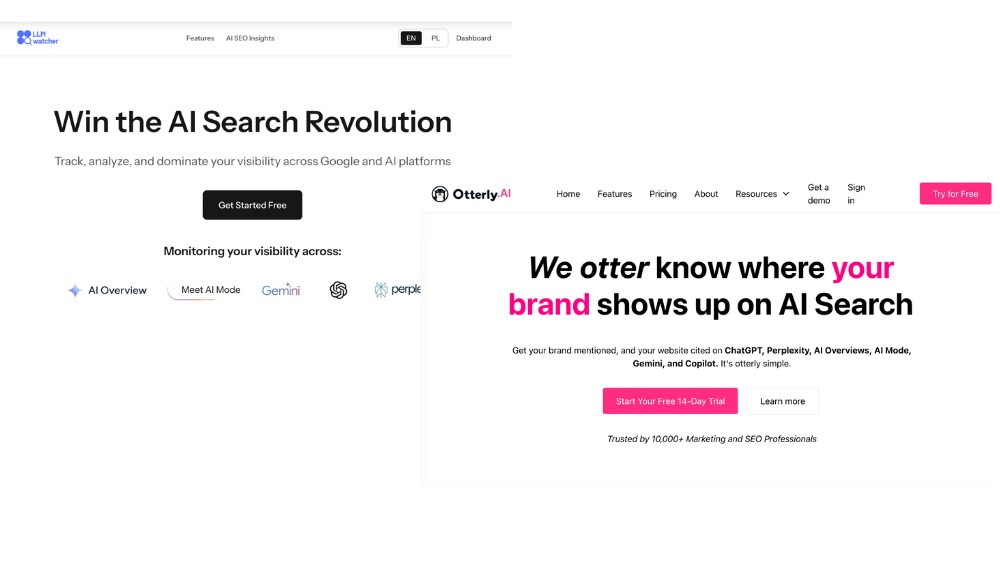
In the webinar, they introduced a tool they built called LLM Watcher specifically to monitor presence in large language model outputs. While that’s a proprietary tool, the concept is something you can replicate manually or with other software: - It can run queries on various AI chat/search platforms (like asking ChatGPT or Google’s SGE certain questions) and see which sources (URLs) are being cited or referenced. - It compiles those sources and shows you, for example, “for these 100 questions, these are the sites that came up most often, and here’s how often your site appeared and in what context.”
This kind of insight is incredibly useful to shape your strategy. Here’s how you can approach monitoring and learning, even if you don’t have a fancy tool yet:
-
Make a List of Important Queries: Based on your keyword research and the questions you identified earlier for content creation, list out the high-value informational queries for your industry. For a furniture store, it might be queries like “how to choose a sofa size”, “best material for dining table”, etc. For each, decide which ones you have content for (you’d hope your site shows up) and which ones you don’t yet (where competitors dominate).
-
Manually test on AI platforms: If you have access to Google’s Search Labs (SGE) or Bing Chat, run those queries there. See what the AI says and, importantly, which sites are cited. Do you see your competitor’s blog being referenced often? Which competitors? This is qualitative, but you can learn a lot. For example, you might discover that a particular competitor’s site is almost always mentioned for “best gardening tools” queries because they have a strong content section or maybe they’re feeding an official source.
-
Use search operators or site search to simulate: Even without direct AI output, you can guess some of it. For example, Google’s SGE often cites 2-3 sources. Those sources likely were in the top search results or had specific snippets. Try the query in normal Google and see the top results; there’s a good chance those are among what AI would pick. Especially look for those with FAQ or Q&A content. Additionally, use Google with a snippet of text from an AI answer (if you see one) to find the exact source.
-
Track traffic patterns: Keep an eye on your organic traffic for informational pages. If you see a dip, could it be that Google’s AI is now answering that query (thus stealing some clicks)? The webinar folks mentioned that overall traffic changes haven’t been dramatic yet because AI adoption is still small, but in niches with tech-savvy users or for very common questions, you might notice softening. Conversely, if you optimize and get featured by AI answers, you might not see a huge traffic spike (because many get answer without clicking), but you could see an increase in impressions (if Google starts counting those in GSC at some point). Right now, it’s a bit of a black box.
-
Two types of “presence” to monitor:
-
Presence as a Source – Is your site being cited/referenced by AI answers? This is like being the featured snippet or the reference link. The LLM Watcher tool was specifically listing “sources used to answer questions”. If you know which of your pages are being used, you can double down on them (keep them updated, make them even more comprehensive).
-
Presence in Sentiment/Context – When AI mentions your brand or site, what is it saying? The webinar tool apparently also aimed to report “how you are talked about – good, bad, context”. For example, if someone asks, “Is Store X reliable for electronics?” the AI might produce an answer combining reviews or forum sentiment. Or if your product is mentioned, is it “recommended” or “cautioned about”? These are advanced things to monitor. Not easy manually, but you could search things like “[Your Brand] reviews” on AI chat to see what it says. The speakers actually envisioned agencies giving a second report to clients about “how you’re spoken of in LLMs, positive or negative”. This is an emerging area of online reputation management.
-
Set up alerts for your brand or content snippets: You could use Google Alerts or a tool like Mention to at least catch if your brand name pops up in some new context on the web (like someone copying an AI answer that mentioned you). Some folks have also used AI detection tools or scripts: one could prompt ChatGPT with queries and then parse the answer for references. If you’re technically inclined, you can automate querying Bing Chat or others via their APIs, though terms of service might restrict extensive scraping.
-
Analyze Competitor Content: If certain competitors are consistently appearing in AI answers (which you’ll notice from your manual tests or tools), study their content. What are they doing right? Do they cover topics more thoroughly? Do they have higher authority (perhaps more backlinks or a well-established blog)? The webinar speakers mentioned using their tool to essentially extract “all sources for many questions” and then audit those sources. For example, find out: SiteA has 200 articles covering long-tail questions, averages 1500 words, each article has an FAQ section, and they all interlink; perhaps that’s why AI likes them. Emulate good practices that fit your context.
-
Adjust strategy based on findings: Suppose you find that for “how to clean a leather sofa”, the AI answer often cites a particular DIY blog. If your own content wasn’t picked, see why: maybe that DIY blog had a more straightforward step-by-step list (and your article was more wordy narrative). This insight could lead you to update your page to include a clear list of steps or an infographic. Or maybe you realize you haven’t covered that sub-topic at all – an opportunity to create new content.
-
Track progress: If you make changes or add content targeting certain questions, go back in a few weeks and test the AI answers again (keeping in mind not everyone sees Google SGE yet; you might use a US VPN if needed or someone in labs). See if your site starts to appear. This can be as satisfying as seeing your rank go from 5 to 1 for a classic keyword – except now it’s more like seeing your site move from not-cited to cited in an AI answer.
It’s worth noting, as per the webinar, that we expect Google and other engines to eventually give site owners more data. They hinted that in Search Console, these “AI queries” might surface down the line. But until then, we have to be proactive and somewhat hacker-like to glean intel.
The Q&A had an interesting question: “Should we track competitor articles that appear in AI mode for commonalities?” The answer was absolutely – that’s basically the strategy the agency is taking. They even mentioned wanting to see “how those pages build their titles, how much content, etc.”. That’s classic competitive analysis, applied to AI results.
One more angle: analytics/traffic. If you notice that some pages are getting traffic from unusual sources, investigate. For instance, the moderator mentioned seeing a question from YouTube (someone might have asked in a live chat or comment) – not directly relevant, but think multi-platform. If you put content on YouTube or other channels, those could interplay with AI answers too (Bing might show a YouTube video, etc.).
Additionally, user behavior: Keep track if users start coming to your site with queries that seem like follow-ups to AI. For example, maybe your analytics show queries like “StoreX return policy” leading to your site – perhaps because an AI told the user to “check StoreX’s site for return policy details” and they then searched that. Hard to pinpoint, but remain observant.
To summarize, monitoring AI search presence is a new frontier. Use a combination of direct testing, third-party tools, and classic SEO competitor analysis to gauge where you stand. It’s about understanding: - Are you in the game when AI answers questions in your niche? - If not, who is, and what can you learn from them? - If yes, are you getting any clicks or is the AI satisfying without clicks? And if no clicks, perhaps think of ways to entice clicks (like the AI summary cites you for more info – if your meta description or title is appealing, a user might still click through).
The speakers also noted agencies likely will start providing reports with two parts: one for traditional rankings and one for LLM presence. You can mirror that approach for your own understanding.
Equipped with this monitoring and adaptation loop, you can continuously improve your content and SEO to secure your position in both traditional and AI-driven search results.
Now, let’s discuss another dimension of SEO in the AI age: off-site factors and digital PR – getting mentioned on the authoritative sites that AIs are likely to trust.
Off-Site SEO and Digital PR in the Age of AI: Earning Mentions on Authoritative Sources
Thus far, we’ve focused on optimizing your own site (on-site content, technical SEO). Equally important is your off-site presence – where else on the web your brand appears, and who links or refers to you. In classic SEO, off-site largely means link building. In the AI context, it extends to being present on the sites that AI models consider authoritative for your topic.
The webinar insight was that a lot of their work now involves “publikacje zewnętrzne” – external publications. This is essentially a PR strategy: creating content or mentions on other websites that are recognized as knowledge sources for AI and LLMs. They noted that this is somewhat a shift back towards traditional PR techniques.
Why is this needed? Because AI models learn from a broad swath of the internet, but they weight some sources more heavily (for training, or for real-time answers). If, for example, your local business writes an amazing guide but it lives only on your low-authority site, an AI might prefer to base answers on a similar guide from, say, The New York Times or a major industry blog. However, if you can get your knowledge or brand featured on those authority sites, then indirectly your expertise flows into the AI’s answers.
Here are strategies for off-site SEO/PR adapted to the AI age:
-
Identify the Topical Authorities in Your Niche: These could be well-known news sites, magazines, high-traffic blogs, forums or Q&A sites (StackExchange, etc.), even Wikipedia. For example, for fitness products, a site like Bodybuilding.com or a health magazine might be key. The webinar’s team uses their tool to get a “shortlist of sites” that often appear as sources in AI answers. You can do similar by looking at who ranks often, who is cited, etc. Make a list: these are your target publications.
-
Get Your Content or Brand Featured There: This could be through guest posting, contributing an expert quote, being interviewed, or even sponsoring content. They mentioned often these prime portals are not cheap – they might charge for placement, and often they nofollow links. But that’s okay for this strategy! The goal is not link juice, it’s to be present in the content that AIs read. For example, if you sell eco-friendly cleaning products, getting mentioned in a “Top 10 Green Cleaning Tips” article on a big home living site (with or without a link) might mean when someone asks an AI for cleaning tips, that article is used and your brand is named as a recommendation.
-
Create the Content You Want to See Out There: Often, you’ll need to provide the content to these external sites. Maybe it’s a “Top 5” list that includes your product (if done tactfully), or a comparative review where you shine. The speakers gave an example: you might try to get an article like “Best bicycle stores in [country]” on a cycling portal, where of course you include your store as one of the best. But there’s a challenge: the portal might not want to list a bunch of stores (especially if some are competitors or they have their own interests). So this requires negotiation or coming up with angles that benefit the publisher too. Sometimes it might require paid collaborations or long-term relationships with content sites.
-
Understand No-follow vs Do-follow in this context: Many reputable sites will only give nofollow or sponsored links for such content (for Google compliance). That’s okay – again, the value here isn’t passing PageRank (though if you can get a follow link, great). A nofollow link or mere mention can still be read by AI. The AI doesn’t care about link attributes; it cares about the content and context. So even a statement like “According to StoreX’s CEO, sustainable materials are key to quality.” on a big site is beneficial – it ties your brand to that topic in the model’s “knowledge graph.”
-
Emphasize Brand and Contextual Mentions: When you do external content, ensure your brand name or URL is mentioned in a meaningful way. The example above shows an authoritative statement associated with your brand. Or an article might say “One great option is [StoreX], which offers a 5-year warranty on their bikes.” That line, if ingested by AI, positions StoreX as a good place with long warranties. The speakers actually mentioned wanting a mention like “ranking najlepszych sklepów” (ranking of best shops) and having their client included. It’s not just about a backlink for human click-through; it’s about telling the AI “this store is top-ranked.”
-
Leverage Existing Relationships: The webinar Q&A noted that many clients have some relationships – maybe they know a local journalist, or they were featured somewhere in the past. Use those. If you’ve done any PR or content marketing before, revisit those channels and see if they can talk about something that aligns with common user questions. Also, utilize any experts in-house to get quoted in articles (HARO – Help a Reporter Out – is one way to get quoted on news sites, which the AI likely values for facts).
-
Consider other formats: It’s not just articles. Videos and podcasts can be sources too (transcripts of popular YouTube videos, for instance, might be part of training data). If you can appear on a popular YouTube channel or podcast in your niche, that content might later be reflected in AI answers (“As discussed on the [Podcast Name], expert [You] said…”) – again, citation might not be direct, but the info permeates.
-
Beware of “learning on clients” by shady providers: The webinar had a question about ads on Facebook guaranteeing LLM visibility. Their answer was skeptical: a lot of people are jumping on the trend with experimental tactics. Many will take your money to do who-knows-what. So choose partners or services carefully. The best approach is usually a strategy that you understand – creating high-value content and placing it where it will be seen by both humans and AI. If someone promises “get you to #1 in ChatGPT answers in 24 hours,” be wary. The truth is, everyone is still figuring out best practices, so lean on common sense and proven PR fundamentals.
-
Be prepared for it to be a slow, ongoing effort: Building these external references is not one-and-done. It’s an ongoing process, much like traditional SEO link-building campaigns. And yes, budget matters – this was noted: bigger budgets can buy wider promotion. But even smaller players can be smart: target smaller authoritative sites or niche communities where you can contribute genuinely useful content (and get mentioned).
-
Reap secondary benefits: These PR efforts not only feed AI; they often bring direct SEO value (even via nofollow, they can bring referral traffic, brand awareness, etc.). The speakers found that for sites with low current visibility, this can be a “new opening and chance” – i.e., maybe you weren’t ranking in Google, but now you can get known through these publications and then appear in AI responses. It’s like leapfrogging via someone else’s authority. And as your brand becomes known, that can eventually help your own site’s authority too (via future links, searches for your brand, etc.).
-
Monitor and adjust: As you implement PR actions, monitor (like we discussed) if AI answers begin referencing those new pieces. If not, maybe the site wasn’t as influential as thought, or the content angle needs tweaking. Also, watch for if those efforts lead to any direct referral traffic or improved trust (maybe customers mention they saw you in an article).
An example scenario: You sell high-end coffee machines. You notice AI often cites a well-known coffee blog for queries about “how to maintain an espresso machine.” You contact that blog to contribute a guest article, say, “Ultimate Guide to Maintaining Your Espresso Machine” by YourCompany. In it, you provide excellent tips, and naturally mention that using a cleaning kit (like the one sold by YourCompany) once a month is recommended. The article goes live, maybe with a brief author bio linking to you. Now, when the AI is asked about espresso maintenance, it might incorporate a tip from that guide (especially if it’s unique, like a specific schedule or method you provided) and might cite the blog or possibly mention your brand if it got included in the text. Even if not explicitly cited, the knowledge graph now has your brand associated with “maintenance kit” and authority.
This approach is reminiscent of what SEO used to emphasize in the pre-Google days – get listed on directories, get mentioned in relevant contexts. We’re coming full circle, except now the “directory” is essentially the AI’s model of reputable sources in your domain.
In summary, earn your place in the broader knowledge ecosystem. If search engines and AI treat certain sites as the canon for answers, try to be part of those answers through collaboration and PR. It’s a higher-level strategy that complements on-site SEO. The combination gives you both the direct visibility (someone finds your site via search) and the indirect influence (someone hears good things about you via AI or other sites and seeks you out).
Now, having covered current tactics, it’s time to step back and look at the horizon: how will AI continue to shape e-commerce and SEO in the coming years? The webinar presented an interesting multi-point outlook on the future, which we will summarize next.
The Future of Online Shopping with AI: From Chat Assistants to Autonomous Agents
Where is all this headed? The webinar speaker painted a picture of five stages (points) in the evolution of AI’s role in e-commerce and search. Understanding these can help you prepare your long-term strategy. Let’s walk through these stages:
Point 1: The Current State – Conversational Search with Limited Memory
We’re at a point where you can have a conversation with AI search assistants. The AI can remember some context during the session (personalization if turned on, previous messages). For example, you ask about running shoes, it gives some info, then you say “I have flat feet, does that change anything?” and it adapts. This is still early – not everyone uses it, and those who do are seeing the kinks and limitations. The conversation might not be very long or deeply personalized yet. But it’s a big shift from single query-answer; we now have multi-turn interactions. For SEO, this means a single user session could touch on multiple related queries. If you have content that addresses each follow-up, you increase chances of staying relevant throughout the conversation.
The speaker noted we’re “at point one” with some history behind our conversation (the chat remembering previous Qs) and minor personalization. This implies point one is basically where AI is assistive but not yet transactional. People are researching with AI but then likely going to websites to execute purchases. From an online store perspective, at this stage you want to capture those who do click out of the AI for more detail or purchase (by having well-optimized landing pages when they come).
Point 2: Commercial Presence and Paid Recommendations – “AI Ads”
The prediction: soon, AI-driven chats will incorporate paid placements or some form of commercial injection. As the speaker wryly said, wherever there’s an audience, advertising follows. So, you might see: - AI recommending products with a “sponsored” tag. - Search chat interfaces letting companies “insert” their products into answers for relevant queries (like how search ads work, but integrated more smoothly into the dialogue). - Possibly charging companies to have their product data integrated (e.g., “ensure your catalog is included in ChatGPT’s shopping plugin results” might be a service).
He gave examples: “Put your products into the chat” and “Pay us to be recommended in the right context”. So, imagine asking Bing Chat for a travel backpack – it might not only suggest some general advice but also say “Backpack XYZ available at Store ABC $99” as a sponsored suggestion.
For businesses, this means another ad channel to consider. Google Ads might evolve to allow “AI answer sponsorship” spots. It’ll be crucial to track what those look like and how users respond (they could be more subtle than current ads). The speaker believed they’ll do it carefully to avoid user revolt and likely label them (because unlabeled ads in answers could be seen as deception and might be illegal). So expect something like “Sponsored” small text in the AI answer.
Action: Keep budget and willingness to experiment with these when they roll out. Early adopters often get cheaper clicks if competition is low initially.
Point 3: Transactions within AI – The AI as a Marketplace or Affiliate
Not far after ads, the next logical step: AI chats facilitating the entire transaction. Instead of sending you to a site to buy, the AI might handle it. For instance, Google’s SGE could morph into a system where after giving you an answer, it says “Would you like to buy Product X now? It costs $50 on StoreY. You can checkout right here.” The AI (or underlying platform like Google) would then take a commission on that sale. This is somewhat like what some voice assistants have tried (Alexa can order things for you), but making it platform-agnostic would be new.
The webinar specifically mentioned businesses like OpenAI or Google negotiating commission deals. This suggests maybe: - OpenAI might have an official plugin for shopping that routes through an aggregator or retailer network for a cut. - Google might integrate something like a universal cart that covers multiple merchants (so you “buy with Google” and Google pays the merchant while charging a fee).
As an e-commerce, you’d want to be plugged into whatever feed or system this uses. It could be an extension of Google Shopping (Merchant Center) where you enable “chat commerce” and agree to terms (commissions). Or a new marketplace partnership with OpenAI via plugins.
Action: Stay informed about such programs. If “ChatGPT Marketplace” becomes a thing, weigh joining it like you would selling on Amazon or eBay. It might bring volume but at a cost. Also, ensure your product data is well-structured (tying back to structured data and feeds) so AI can present your offer accurately in these scenarios.
Point 4: AI Shopping Agents (Autonomous, Multi-Step Purchasing)
This is more futuristic: having an AI agent that can handle complex shopping tasks end-to-end on your behalf. The speaker describes it as “agency-based buying” or “agent-based” – where you tell an AI to do something and it orchestrates multiple steps, possibly across sites and even over time.
For example, you could say: “Buy me groceries for next week, similar to what I got last week, except I don’t need milk.” The AI might: - Recall what you bought (past orders or preferences). - Compare available stock/prices at your preferred grocers. - Compile an order (maybe even negotiate deals if possible). - Place the orders to be delivered to you, all while you do nothing.
Another example: “Find me a good used car within 50 miles for under $10k, negotiate the price, and set up a test drive.” The AI could trawl listings, talk to sellers (via some interface), and come back with an appointment for you.
For e-commerce, especially retail goods, an agent might one day choose the store for the customer. That means your store needs to appeal to AI agents’ criteria. What will an AI agent consider? - Price and availability (obviously). - Delivery times. - Maybe customer service or return policies (an agent might know from training data which vendors are troublesome). - Possibly API access – an agent might prefer vendors that have APIs it can integrate with smoothly to place orders. - If agents become brand-agnostic, you’d want to ensure your data (catalog, pricing) is accessible to those AI systems. This could mean participating in aggregator platforms or exposing certain APIs.
The speaker likened it to sci-fi becoming reality, and gave the grocery example specifically, which really highlights convenience.
SEO in this world might shift from attracting humans to attracting AI agents. You might need to optimize your offerings to be agent-friendly: e.g., ensure your site can handle automated queries or orders, and emphasize factors that an algorithm would value (like very high fulfillment ratings).
Also, negotiation by AI was mentioned. Can you imagine an AI agent trying to bargain wholesale prices or bulk deals? If you’re B2B or flexible pricing, perhaps future SEO involves feeding dynamic pricing info or having systems in place for AI-driven negotiation (this is speculative, but interesting).
Point 5: The Role of Online Stores – From Front-End to Logistics
The final point was more philosophical: online stores might evolve to focus more on logistics and fulfillment, while AIs handle the interface with customers. The speaker suggests a future where shops become “providers of perfect logistics” for AI agents’ orders. The fight shifts from attracting eyeballs to being the best at delivering the goods cost-effectively and reliably (because the AI will choose suppliers who are efficient and reliable).
He does add “this is years away, and we’ll have plenty of fight for ‘position here and now’ in the meantime”. So it’s a long-term vision: maybe a decade from now, people just trust their AI to procure things, and the AI picks from maybe a few big fulfillment networks or highly optimized niches. Perhaps smaller retailers consolidate or plug into larger marketplaces so that the AI deals with those (somewhat like how many retailers now rely on Amazon Marketplace for distribution).
From an SEO perspective, this point is less about keywords and more about business model: you might aim to build your brand as a trusted fulfillment source. That could involve: - Emphasizing your reliability, maybe getting certifications or being part of an AI’s “trusted vendor program.” - Possibly connecting inventory systems directly with AI platforms so they know what you have (for real-time ordering). - And focusing on differentiators like unique products, or extremely good service, so AI sees value in selecting you over a generic central warehouse.
The tear in the eye (“łeska w oku”) comment suggests a bit of sadness that shops might lose direct contact with customers if AI agents take over interaction. But as he said, until that day, we have years of competing for visibility ahead.
So, what should you do now, given this future vision? - Stay agile. The SEO practices we discussed (quality content, structured data, etc.) are all stepping stones to being part of that future environment. For example, structured data will likely underpin agent communications. - Build your brand reputation. If AI is going to pick winners in the future, it will choose the ones with strong reputations (just like we humans do now, albeit via different signals). So continue to gather positive reviews, press mentions, etc. The AI agent of tomorrow might consider those. - Invest in customer experience and loyalty. If in a few years an AI asks a user “Which retailers do you prefer me to use?”, you want to be on that list due to your excellent past service with that customer (or broadly known trust). - Keep improving logistics and operations. This seems outside “SEO,” but it’s part of being competitive in the world of AI-assisted shopping. Fast shipping, good stock management, easy returns – these all will factor in when an AI chooses where to order. (Google’s algorithm already indirectly considers some of these via things like Google Seller Ratings and the Shopping experience scorecard).
The message from the webinar is both thrilling and daunting: revolutions akin to sci-fi are coming. But we’re not there just yet. There’s time to adapt.
Importantly, the speaker encouraged continuing the fight in the present: “we likely have a good few years of fighting for position here and now, which I of course encourage everyone to do.”. In other words, don’t get so caught up in futurecasting that you abandon current SEO and marketing – that’s still where your bread is buttered for now.
In conclusion, by anticipating these trends, you can gradually orient your strategy to be future-ready while still excelling in the present. The next and final section will wrap up key takeaways and emphasize maintaining a balanced, savvy approach – combining human expertise with AI tools – as we navigate this new age of SEO.
Adapting SEO with Human Expertise and AI Assistance
The landscape of SEO for e-commerce is undeniably changing under the influence of AI, but it’s not an apocalypse – it’s an evolution. As we’ve explored, many traditional SEO principles still hold true: deliver value to users, maintain a technically sound site, and build authority in your niche. What’s new is how that value is being assessed and delivered – sometimes by an AI intermediary.
Key takeaways from this discussion:
-
Quality and Relevance Reign Supreme: Whether content is read by a human or summarized by an AI, it needs to be good. That means accurate, useful, and relevant. Shortcuts won’t cut it. Mass-produced, unedited AI content is likely to be filtered out by algorithms and ignored by users. Conversely, content that answers real questions and offers unique insights will find a place, either directly in search results or as part of AI answers. In Google’s eyes (and likely in AI’s “eyes”), helpful content is the ultimate goal. So keep your focus there.
-
The Power of Human Strategy: Tools like ChatGPT can generate text and even give SEO tips, but they lack the strategic understanding of your business and audience. This is where human expertise remains invaluable. You, or your SEO experts, can analyze trends, empathize with customer pain points, and craft a strategy that aligns with business goals – tasks AI isn’t ready to do alone. One question posed in the webinar was essentially, “What can an agency (human experts) do that AI can’t?” The answer: experience and judgment. An AI might churn out advice or content, but it doesn’t know your specific context, and it won’t bear the consequences if that advice is wrong. Seasoned SEO professionals have a wealth of past experiments and learned mistakes to draw on. They can prioritize what actions likely yield ROI and steer clear of tactics that sound good but fail in practice. In short, AI is a tool – a very powerful one – but human expertise directs the tool effectively. Use AI to augment your capabilities (faster analysis, content drafts, automation of routine tasks), but always apply a layer of human review and strategy on top.
-
Ethical Adaptation and Transparency: As AI integrates more into search and shopping, maintain transparency with your customers and fairness in your tactics. For instance, if/when you start using AI ads or letting AI transact, be clear and ethical (e.g., mark up sponsored content, protect user data in AI interactions). Also, avoid black-hat schemes like trying to manipulate AI with hidden text or malicious prompts – these will backfire and hurt trust. Adapting to AI means finding legitimate ways to meet its criteria, not gaming it with tricks (which historically, Google has always caught onto).
-
User Experience is Still the North Star: Think of AI as an ultra-sophisticated proxy for user satisfaction. Google’s algorithms, with or without AI, are ultimately trying to satisfy users. So, if you focus on genuinely improving user experience, you’re aligning with where search is headed. This includes page usability, site speed, helpful content, and good customer service. All of these can indirectly feed into better SEO – happy users create positive signals (low bounce rates, good reviews, word-of-mouth). Even in an AI-driven scenario, the businesses that deliver delight to customers will shine (because AI will notice through data).
-
Keep Learning and Stay Agile: The world of AI in SEO is new and rapidly changing. What’s true today might shift in a year. For example, maybe new analytics will appear, or new optimization techniques for AI answers will emerge (like “answer optimization” akin to snippet optimization). Stay updated by following industry news, testing things yourself, and perhaps attending future webinars or training. Be ready to pivot strategies. As the moderator mentioned, this webinar topic itself might need follow-ups given how fresh it is. The companies and SEOs that learn the fastest will have an edge.
-
Balance Present and Future: Allocate some effort to forward-looking initiatives (structured data, exploring content on authoritative sites, experimenting with AI integrations), but also double down on what currently works (SEO for the existing SERPs, content marketing, PPC, etc.). It’s a dual track: one eye on the horizon, one on the road under your feet. Don’t neglect your current organic and paid channels while chasing AI rainbows – integrate AI prep as a part of your broader strategy.
-
Mindset: Opportunity, Not Just Threat: It’s easy to approach things like ChatGPT or Google’s AI answers with fear (they’ll steal our traffic!). But they also present opportunities: new ways to reach users, new tools to improve efficiency, and perhaps a chance to outpace competitors who are slower to adapt. The speaker pointed out that those with lower traditional SEO visibility might see AI as a “new opening” – maybe your site never beat the giants on Google, but you could get featured in an AI answer because you answered a niche question better than anyone. Embrace that mindset. SEO in the age of AI is not about doing the same old, it’s about finding the niches and methods that didn’t exist before.
-
Trust and Brand Building: As anonymity and content floods increase (with AI generating lots of generic info), brands and trust signals become even more crucial. Users will gravitate towards known and trusted names – and AI, which often reflects user sentiment, will too. So invest in building your brand authority: engage with your community, highlight your credentials (e.g., have real experts create content, and showcase their expertise), garner positive reviews and press. Over time, a strong brand can become a keyword of its own (people might specifically prompt AI about your brand, or AI will mention your brand as a go-to if it’s well-regarded).
To conclude this comprehensive guide, consider a real-world analogy: SEO in the age of AI is like navigating with both a compass and a GPS. The compass is your fundamental direction – focusing on quality, user-centric content, and solid site practices. The GPS is the fancy new AI tech giving you nuanced routes and real-time updates – you should use it (AI tools, analytics, new SERP features) to refine your path. But you wouldn’t turn off your sense of direction just because you have a GPS; likewise, don’t abandon foundational principles just because AI is in vogue. Instead, combine them: use the new tools to enhance your strategy while anchored by the core values of serving your customers.
The future of search will likely blend AI convenience with human authenticity. By preparing your online store with excellent content, a strong technical framework, and a proactive approach to emerging trends, you position yourself to not only survive the changes but to thrive on them. In the age of AI mode and ChatGPT, the best results will come to those who optimize for both algorithms and people – essentially, who practice great SEO with a human touch.
Keep testing, keep learning, and remember that behind every search query – even AI-powered ones – is a human seeking something. If you fulfill that need better than others, you’ll remain on top, no matter how the query is delivered. Good luck, and here’s to succeeding in this new era of SEO for online stores!

Paweł Jóźwik
Paweł Jóźwik – CEO of Traffic Trends | E-commerce, AI, and Sales Growth Expert
President of the Board at Traffic Trends, an agency he has successfully positioned as a leader in performance marketing for e-commerce for over a decade. His mission is to support online stores in achieving measurable sales growth through advanced marketing strategies.
A computer scientist by education from the Poznan University of Technology, Paweł possesses a deep understanding of both the technical foundations of e-commerce and the commercial aspects of running an online business. He gained his experience building online stores from scratch, and today, as the head of a leading agency, he has a direct impact on the sales success of dozens of companies.
He is passionate about new technologies, with a particular focus on the impact of artificial intelligence and LLM models on marketing and search engines. He actively researches how companies can adapt their strategies to the new reality dominated by AI. He is the creator and originator of tools such as LLMWatcher, which monitors brand presence in AI-generated answers.
He is a regular speaker, hosts webinars, and publishes in industry media, sharing practical knowledge on the future of SEO, web analytics, and "Agentic Commerce."
Related Articles