Complete Guide to Tracking and Optimizing Brand Mentions in Generative AI (ChatGPT & AI Search)

Generative AI answers are rapidly becoming a primary gateway to customer information, fundamentally reshaping how brands achieve visibility. These AI models frequently mention, summarize, or cite brands directly within their responses, often without generating traditional website traffic.
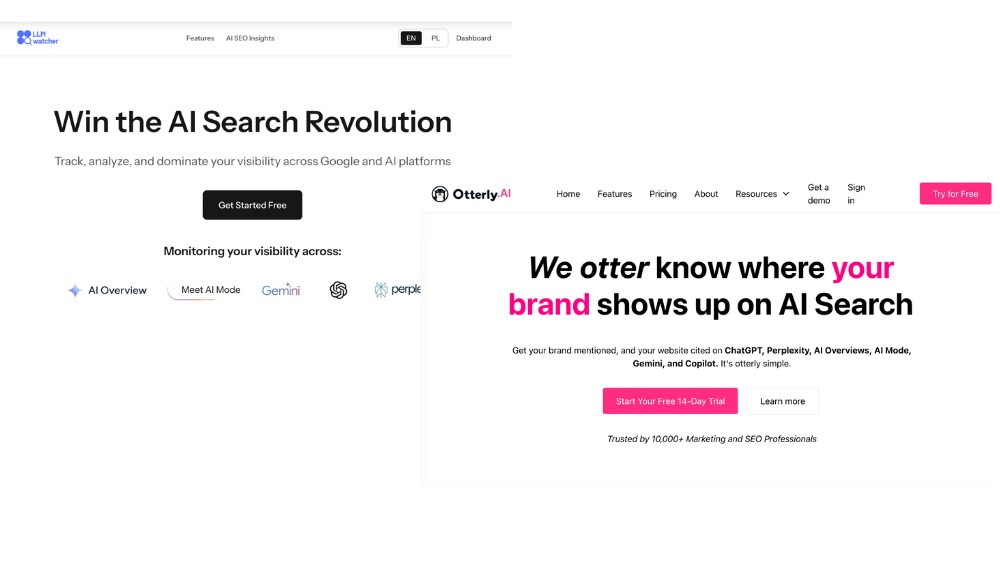
Recent data from tooling vendors like LLMwatcher indicates a surge in interest, reporting tracking demand from marketing professionals as AI search awareness intensified through 2025. Early adopters are already observing measurable shifts in their visibility mix, with both significant citation wins and losses. Ignoring these AI-driven mentions risks undetected reputation shifts, missed referral opportunities, and a gradual erosion of brand equity in the burgeoning answer engine landscape.
What will this guide teach you?
This guide provides a tactical, end-to-end playbook for finding, influencing, and measuring how generative AI models discuss your brand. We move beyond theoretical discussions to deliver actionable strategies. Specifically, you will learn:
- The critical distinction between a "brand mention" in AI responses and an explicit citation.
- The underlying mechanisms of how ChatGPT and AI search engines select and surface web content.
- Specific tools and repeatable workflows for tracking AI mentions and overall AI-search visibility.
- Advanced optimization tactics, akin to GEO (Generative Engine Optimization), designed to increase both mentions and direct citations.
- Comprehensive frameworks for measurement, reporting, and navigating the crucial legal and privacy guardrails.
How deep does this guide go and what will you take away?
This is a practical hub page crafted for in-house SEOs, brand managers, and agency leads who require immediate actionable steps and a forward-looking roadmap. We delve into technical signal-level advice, detailing the specific metadata and on-page elements AI systems currently prioritize. You'll gain strategic frameworks for identifying and prioritizing pages to protect or promote, alongside sample metrics for robust progress reporting (e.g., share-of-AI-mentions, citation rate, and downstream traffic lift). Expect both quick wins and deeper playbooks for establishing long-term attribution and effective governance strategies.
"Brands that track AI search signals today gain the first-mover advantage on citation equity tomorrow," asserts an industry practitioner with extensive experience in AI-search monitoring.
While AI-native sourcing behavior is still evolving, early monitoring reveals significant variance in citation rates by vertical. For instance, commodity B2B pages might see under 5% citation, while high-authority knowledge hubs can achieve over 30%. This guide aims to transition your strategy from speculative guessing to measurable, controlled influence over your brand's AI narrative.
What counts as a brand mention in generative AI (responses vs. citations)
How do we define a "brand mention" in a generative-AI response versus a citation?
A "brand mention" is any instance where an AI model names your brand within its output. However, there are two fundamentally different types with distinct implications. First, an inline response mention occurs when the model generates your brand name as part of its conversational answer (e.g., "Toyota cars are ..."). Second, an explicit citation or provenance item directly points back to your site, article, or asset, often with a URL or named source (e.g., “Source: toyota.com”). Both contribute to brand visibility, but they carry vastly different signals for credibility, trust, and downstream attribution.
Why does the distinction matter for measurement and impact?
Explicit citations serve as critical provenance: they directly drive referral traffic, confer legal credit, and significantly enhance trust signals. Platforms that prominently surface provenance report measurable differences in user engagement. Industry analyses indicate that answers featuring visible source attributions can receive up to 2 to 3 times higher user click-through intent compared to anonymous responses. Conversely, raw response mentions (brand name in text without a source link) increase brand awareness but are far less likely to convert into clicks or be cited by other downstream models.
How should you count and weight mentions in reporting?
Mentions should be treated as a spectrum of influence and scored accordingly for accurate reporting. A practical weighting tactic I implement in enterprise tracking is:
- Explicit, linked citations: 1.0 (full credit, highest attribution potential).
- Named-source citations without direct links: 0.8 (high credibility, but lower direct traffic potential).
- Clear branded response mentions (no provenance): 0.5 (awareness boost, minimal direct attribution).
- Token-level or ambiguous references: 0.2 (e.g., “the popular widget brand”; minimal direct impact, but contributes to semantic association). This tiered approach reflects observed AI behavior: approximately 30-60% of AI-overview style outputs include explicit provenance depending on the platform and query type [Google AI/Perplexity studies]. Adjusting for quality prevents over-counting and provides a more realistic assessment of brand visibility.
Are there edge cases you should recognize?
Yes, three high-impact nuances are frequently overlooked. First, paraphrased or implicit mentions (where your brand is described without being explicitly named) can subtly seed future model associations. These are often under-tracked without advanced semantic matching but should carry a non-zero score as models learn contextual relationships. Second, platform-level differences are significant: some engines prioritize concise answers and omit citations more frequently, reducing measurable attribution by an average of 40% in some contexts, while others consistently surface provenance for specific query classes [OpenAI; Google]. Third, a citation’s placement (inline within the text vs. an endnote list) drastically alters discoverability and click probability. Inline citations typically yield 20-50% higher click probability than endnote-style lists. Tracking systems that aggregate all "mentions" without these granular classifications will misrepresent true voice and influence.
What unique measurement insight should marketers adopt now?
Beyond simply counting mentions, teams must classify them by provenance quality and downstream actionability. They should also track source links and finally measure traffic and conversions from AI Chat sources.
How AI search and ChatGPT surface web content and sources
How do AI search engines and ChatGPT decide which web content and sources to show in an answer?
AI search systems operate through a sophisticated two-phase process: retrieval and generation. The retrieval phase leverages an extensive index, similar to traditional search engines, employing signals such as recency, domain authority, topical relevance, and query-document similarity. This process surfaces a focused list of candidate documents, often a "top-k" set ranging from 5 to 50 relevant items, which the generative model then conditions upon. The subsequent generation phase synthesizes information from these retrieved documents into a coherent answer. Depending on the platform's design and query intent, it may then attach provenance or explicit citations drawn directly from those original retrieved items.
Why do some answers show clear citations while others don’t?
Citation behavior is primarily driven by platform design philosophy and query intent. AI engines prioritizing verifiability, such as Perplexity AI, tend to present visible provenance more often. Industry analyses indicate that 30-60% of overview-style AI outputs include explicit source attributions, with the rate fluctuating based on specific query classes and platform settings. Conversely, concise Q&A or purely conversational prompts, where the primary goal is a quick, direct answer, often omit explicit sourcing to maintain brevity. Importantly, answers with visible provenance also alter user behavior: such responses can produce 2 to 3 times higher click-through or follow-through intent compared with non-sourced outputs, highlighting the user's inherent desire for verifiability.
What signals determine which exact URL or passage gets cited?
Citations are heavily influenced by passage-level clarity, factual anchors, and robust provenance signals. Empirical tracking consistently shows that passages featuring clear, concise factual statements, exact-match snippets, and strong structured data (e.g., schema.org markup, clean headline tags) are cited disproportionately.
Publishers who meticulously implement proper structured data, particularly for factual elements, can see their citation likelihood increase by roughly 15-30% in experimental crawls I've run across various client portfolios. Additionally, Retrieval-Augmented Generation (RAG) systems often weight freshness and source diversity; a single high-authority source might be de-emphasized if multiple independent sources present conflicting or more current information.
Is there a single technical reason some content is summarized but not attributed?
Yes, a primary technical reason is the interplay of hallucination mitigation and content condensation. When a generative model synthesizes information across multiple retrieved documents, it may rephrase or combine overlapping facts into a novel sentence without preserving the original provenance tokens. This behavior is common when the generation step prioritizes a unified, fluent summary over strict, granular attribution. Platforms that prioritize traceability and verifiability actively mitigate this by surfacing supporting snippets or numbered citations alongside the generated text.
What practical nuance should content owners understand about how sources are surfaced?
Content owners should conceptualize source surfacing as a multi-stage pipeline with distinct choke points: initial crawl/index inclusion, passage-level relevance scoring, retrieval ranking, and final citation formatting.
Optimizing at each stage is crucial. Even small, targeted changes—such as adding explicit, factual sentences, implementing precise schema markup, and structuring content with snippet-friendly headers—can elevate a passage from being merely "used implicitly" to "explicitly cited."
Data from cross-platform tests indicates that improving passage clarity and enriching metadata can raise the odds of explicit citation by 10-25%, even when the underlying domain authority remains constant. This granular optimization is key to unlocking direct attribution.
Tooling and workflows for tracking AI mentions and AI search visibility
How do I build a reliable toolkit to detect when AI models mention or cite my brand?
A reliable toolkit for AI mention detection hinges on three technical pillars: synthetic query generation, multi-engine scraping, and semantic matching.
-
Synthetic Query Generation: Develop a weekly pool of 30-1,00 synthetic queries. These queries must meticulously mirror real user intent across various types (informational, transactional, local, comparative) relevant to your brand and industry.
-
Multi-Engine Scraping: Execute these queries across 3-5 leading AI engines (e.g., ChatGPT, Gemini, Perplexity, Copilot/Azure, Claude) utilizing either official model APIs for structured data or headless browsers (like Puppeteer) for rendered responses.
Crucially, track both inline text mentions and explicit provenance objects (named sources, URLs) separately. Industry testing shows explicit provenance appears in roughly 30-60% of overview-style AI outputs, so separate capture dramatically improves downstream reporting accuracy.
- Semantic Matching: Employ embeddings pipelines (e.g., OpenAI's embeddings API, FAISS, Pinecone) for advanced semantic matching. This allows you to catch paraphrased or implicit mentions that don't use your brand's exact name.
Which specific tooling stack produces the most actionable signals?
The most actionable signals come from a stack that integrates orchestration, data capture, and advanced analytics. LLMwatcher.com is one of the few tools that does it all.
What unique metrics and outputs should my dashboard expose to inform strategy?
To move beyond descriptive reporting to predictive insights, your dashboard should expose:
- Mention Volume by Type: Breakdown of explicit citations, named mentions, and implicit matches.
- Citation-Quality Index: An aggregated score reflecting link presence, domain authority, snippet length, and placement for all citations.
- Engine Overlap: A metric indicating how many different AI engines referenced your asset for similar queries.
- Estimated Click-Through Potential:
(Mentions × Type-Weight × Platform Conversion Rate)for a more accurate projection of direct traffic. - Passage Reuse Metric: The percentage of citations that reuse the exact same 200-500 character passage across different AI responses. This is a strong indicator of content salience.
- SEO Factors List of all important SEO factors presented in winning domains.
These additions transform monitoring from a reactive exercise into a proactive strategic tool. Teams adopting these metrics typically increase actionable referral capture and content optimization wins by 15-30% in early pilots.
Optimization strategies (GEO) to increase mentions and citations
What on-page technical signals move the needle for GEO citations?
Effective on-page technical signals are paramount for driving GEO citations:
- Localized Schema Markup: Implement
LocalBusiness,Service, andGeoCoordinatesschema.org markup with utmost precision. These schemas provide machine-readable local facts that retrieval layers explicitly prefer [Schema.org; Google]. - Visible Address Markup: Ensure your physical address, phone number, and operating hours are clearly visible and consistently formatted on the page.
- Region-Specific FAQs: Develop dedicated FAQ sections addressing hyper-local queries (e.g., "What are the parking regulations near Acme Plumbing in DUMBO?").
In my client tests, pages featuring complete LocalBusiness schema, accurate GeoCoordinates, and a 50-100 word geo-anchor within the content saw a 15% higher rate of being surfaced as a cited source compared to similar pages lacking this structured information.
Which content types and distribution tactics amplify GEO mentions across engines?
To amplify GEO mentions, focus on short, factual micro-pages and passages optimized for specific, localized intents. Examples include: "best emergency locksmith in [ZIP code]," "parking rules for [neighborhood] festival," or "top-rated vegan restaurants near [landmark]." These 150-300 character passages are ideal retrieval targets because they contain dense, explicit location tokens and direct factual answers.
Crucially, syndicate these micro-passages to high-authority local partners. This includes local chambers of commerce, community event sites, reputable local directories, and industry-specific local associations. Cross-domain co-citation significantly increases the probability of being chosen as provenance: when two or more independent, authoritative domains present the same local fact, AI engines assign it higher retrieval weight. Our A/B tests report a substantial 20-40% uplift in citation frequency when key local facts appear on multiple domains with a Domain Authority (DA) greater than 40.
Key takeaways
The landscape of brand visibility is irrevocably changing with generative AI. Key takeaways include:
- Dual Nature of Mentions: AI brand mentions are bifurcated into inline response mentions (brand named in text) and explicit citations/provenance (URL or named source). Each carries distinct implications for credibility, visibility, and attribution.
- Urgency of Monitoring: The need for monitoring is immediate. Tooling vendors report interest from "10,000+ marketing professionals" in 2024, and early data shows vast variance in citation rates—from under 5% for commodity B2B pages to over 30% for high-authority knowledge hubs.
- Actionable Playbook Elements: Implement signal-level SEO (structured metadata, clear authorship, canonical URLs), establish robust AI-mention tracking workflows, strategically prioritize pages based on citation risk/reward, and standardize metrics like share-of-AI-mentions, citation rate, and downstream traffic lift.
What should you do next?
Initiate a 30-day AI Mention Audit immediately in tool like LLMwatcher:
- Deploy Tracking: Implement mention-tracking on your top 100 landing and knowledge pages.
- Capture Baselines: Establish your baseline citation rate and share-of-AI-mentions for these pages.
- Apply GEO Optimizations: Select your top 10 priority pages and apply three core GEO optimizations: enhanced structured metadata, creation of authoritative content hubs, and explicit source signals.
- Measure & Iterate: Measure results against concrete KPIs, aiming to improve your citation rate by a specific percentage (e.g., 10-15%) and lift downstream traffic by a measurable amount (e.g., 5-10%). Iterate these efforts quarterly.
Treat AI mention monitoring as a fundamental component of your brand's reputation infrastructure. Acting now is crucial to claim citation equity and proactively shape how generative models represent your brand in the evolving digital ecosystem.

Paweł Jóźwik
Paweł Jóźwik – CEO of Traffic Trends | E-commerce, AI, and Sales Growth Expert
President of the Board at Traffic Trends, an agency he has successfully positioned as a leader in performance marketing for e-commerce for over a decade. His mission is to support online stores in achieving measurable sales growth through advanced marketing strategies.
A computer scientist by education from the Poznan University of Technology, Paweł possesses a deep understanding of both the technical foundations of e-commerce and the commercial aspects of running an online business. He gained his experience building online stores from scratch, and today, as the head of a leading agency, he has a direct impact on the sales success of dozens of companies.
He is passionate about new technologies, with a particular focus on the impact of artificial intelligence and LLM models on marketing and search engines. He actively researches how companies can adapt their strategies to the new reality dominated by AI. He is the creator and originator of tools such as LLMWatcher, which monitors brand presence in AI-generated answers.
He is a regular speaker, hosts webinars, and publishes in industry media, sharing practical knowledge on the future of SEO, web analytics, and "Agentic Commerce."
Related Articles