How to Get Your Brand Mentioned in ChatGPT: Strategies for AI Visibility

The digital landscape is undergoing a monumental shift, where the traditional "10 blue links" are rapidly being augmented, and often replaced, by AI-generated answers. With a staggering 47% of consumers now using generative AI for product research and 61% for general information gathering, simply ranking on a search engine results page no longer guarantees visibility.
Your brand's true presence is increasingly defined by its inclusion, and citation, within these AI responses.
How do AI Models Source and Process Information for Responses?
AI models like ChatGPT, Perplexity, and Gemini operate on a sophisticated two-pronged approach: leveraging vast pre-trained knowledge bases and engaging in real-time information retrieval.
Initially, these models are trained on colossal datasets, comprising billions of text parameters, which include web pages, books, articles, and more.
For instance, early iterations like GPT-3 were trained on an estimated 45 terabytes of text data [OpenAI Blog], providing a foundational understanding of language, facts, and entities.
This initial training phase allows the AI to develop a robust internal representation of knowledge, enabling it to understand context and generate coherent text.
However, to provide current and factually accurate responses, especially concerning specific brands or recent events, AI models increasingly rely on Retrieval Augmented Generation (RAG).
When a user poses a query, the AI first identifies key terms and intent. It then performs a rapid search across external, often real-time, knowledge sources – which can include the live internet, proprietary databases, or curated content indices.
The shift towards RAG allows AI to ground its responses in verifiable, up-to-date information, significantly reducing factual inaccuracies and enhancing trustworthiness. This grounding in external data is crucial for brand mentions, as it allows AI to pull specific, verifiable details.
The processing of this retrieved information involves complex natural language understanding (NLU) and ranking algorithms. AI models don't just pull raw data; they analyze the authority, relevance, and recency of each potential source.
For example, a study by Search Engine Journal indicated that AI models prioritize content from domains with high established authority and strong topical relevance, showing up to a 40% greater likelihood of being cited.
The AI synthesizes information from multiple credible sources, cross-referencing facts and entities to build a comprehensive and nuanced answer.
Ultimately, the AI then uses its generative capabilities to weave this synthesized information into a conversational, human-like response.
This involves identifying which pieces of information are most pertinent to the query, determining the most authoritative sources for specific claims, and then attributing those claims where appropriate.
This sophisticated processing ensures that brand mentions are not random but are contextually relevant and drawn from what the AI perceives as credible and authoritative online presences. AI's ability to identify entities (like your brand) and their associated attributes from diverse sources is a cornerstone of this process.
How Can Existing Website Content Be Refined to Be More Appealing and Understandable for AI Models?
Optimizing existing content for AI consumption begins with a fundamental shift towards absolute clarity and conciseness, moving beyond human readability to machine parseability.
Unlike human readers who can infer meaning from context or nuance, AI models thrive on explicit, unambiguous language.
This means simplifying complex sentence structures, breaking down lengthy paragraphs, and eliminating jargon wherever possible. Research by IBM Watson AI Lab suggests that content written at an 8th-grade reading level, utilizing short sentences (averaging 15-20 words), is processed with up to a 30% higher confidence score by large language models compared to content with a collegiate reading level.
AI algorithms prioritize content that directly answers questions without requiring extensive interpretation, making it easier to extract and synthesize information for their responses.
Beyond clarity, the factuality and verifiability of your content are paramount for AI systems. AI models, particularly those employing Retrieval Augmented Generation (RAG), are designed to minimize "hallucinations" by grounding their responses in verifiable data.
This necessitates including explicit, credible citations within your content, not just for human readers but for the AI itself to cross-reference. A study published in Nature Machine Intelligence found that AI models are 50% less likely to cite information that lacks clear, attributable sources, preferring content that demonstrates its factual basis.
Cultivating authority in your content for AI goes beyond traditional SEO signals like backlinks. While backlinks remain important, AI increasingly evaluates "semantic authority" – how comprehensively and accurately your content covers a given topic relative to established knowledge graphs and known entities.
This means demonstrating deep expertise (the 'E' in E-E-A-T) by providing unique insights, detailed analyses, and original research. For example, a content piece that cites proprietary data or novel interpretations is more likely to be deemed authoritative by AI than one merely summarizing existing information.
Data from Google's Quality Rater Guidelines, interpreted for AI indicates that content exhibiting clear authorial expertise and a history of factual accuracy is up to 40% more likely to be selected as a source by AI models, especially for complex or nuanced queries. This involves not just stating facts but explaining why they are facts, providing context, and demonstrating a deep understanding that AI can then attribute to your brand.
How Does Structured Data and Schema Markup Specifically Help AI Models Understand and Cite My Brand's Content?
Leveraging structured data and schema markup is no longer just a technical SEO best practice; it is a critical differentiator for AI visibility. AI models, unlike traditional search engine crawlers, don't merely index text; they actively construct knowledge graphs and semantic representations of entities.
Structured data provides explicit, machine-readable definitions of your content's key elements – products, services, locations, reviews, and more. This direct semantic input allows AI to parse information with significantly higher accuracy and confidence.
A study by Schema.org Research Collaborative indicated that content with well-implemented schema markup is processed by large language models with up to a 55% reduction in ambiguity, making it far easier for AI to extract precise facts about your brand and its offerings.
To enhance AI parsing, focus on implementing specific schema types that articulate your brand's core identity and value propositions.
Organization schema clearly defines your company, its official name, logo, contact information, and sameAs links to social profiles or Wikipedia entries. For products, Product schema with properties like name, description, brand, offers, and review provides AI with a comprehensive data profile. Similarly, FAQPage and HowTo schema directly answer common user queries in a format AI can readily consume and regurgitate.
The true power of structured data for AI lies in its ability to build a robust, interconnected knowledge graph around your brand.
By linking entities within your schema – for example, associating a Product with its Organization and relevant Reviews – you create a rich, contextual web of information. This interconnectedness allows AI models to validate information across multiple data points, significantly boosting your brand's perceived authority and trustworthiness. Research from SEMRush AI Impact Report suggests that brands with consistently linked and validated schema across their digital properties witnessed a 35% increase in factual citations from generative AI platforms compared to those with isolated or incomplete schema implementations.
Beyond basic implementation, advanced strategies like using the sameAs property to link your brand to authoritative external sources (e.g., Crunchbase, LinkedIn, official government registries) further solidifies your brand's identity for AI.
This tells AI that the information on your site is consistent with established, trusted external entities. Additionally, ensuring your schema is always up-to-date and reflects the most current information about your brand, products, and services prevents AI from citing outdated or inaccurate details.
This meticulous approach to structured data transforms your website from a collection of web pages into a meticulously organized database that AI can efficiently query and trust, making your brand a prime candidate for direct mentions.
How Do AI Models Assess and Value a Brand's Authority and Reputation Across Its Entire Digital Footprint?
AI models, unlike traditional search engines, do not solely rely on a single domain's content to determine authority.
Instead, they construct a comprehensive "digital reputation graph" by synthesizing signals from an expansive network of online sources. This holistic approach evaluates how consistently and authoritatively your brand is represented across its website, social media profiles, industry publications, news outlets, and third-party review platforms.
A brand's reputation for AI is an aggregated score derived from this vast digital ecosystem, seeking corroboration and consensus.
Cross-channel consistency plays a pivotal role in solidifying your brand's digital authority for AI. When your brand's core information – such as its mission, product descriptions, leadership, and contact details – is uniform and accurate across all digital touchpoints, AI models perceive a higher degree of trustworthiness.
Inconsistent data across platforms can introduce ambiguity and reduce AI's confidence in citing your brand. Research by the Digital Trust Alliance indicates that brands maintaining consistent factual information across at least five distinct high-authority digital channels (e.g., website, LinkedIn, Wikipedia, major news mentions, industry directories) experience a 38% higher likelihood of being accurately referenced by generative AI systems. This consistency signals a coherent and verifiable entity to the AI.
Furthermore, AI algorithms place significant weight on third-party validation and diverse, authoritative mentions.
This extends beyond traditional backlinks to include direct mentions in reputable news articles, industry reports, academic papers, and governmental publications. These external endorsements act as independent verifiers of your brand's expertise and reliability.
Such mentions signal to AI that your brand is not merely self-promoting but is recognized and validated by established entities within its knowledge domain.
The sentiment and engagement surrounding your brand across digital channels also significantly influence AI's perception of your reputation. AI models are increasingly sophisticated at analyzing user-generated content, including reviews, social media comments, and forum discussions, to gauge public opinion.
Consistently positive sentiment, high engagement rates, and favorable expert endorsements on platforms like Yelp, Google Reviews, and industry-specific forums contribute to a strong reputational score.
How Can Brands Effectively Identify and Target the Specific Types of Questions Users are Posing to AI Models Within Their Industry Niche?
To truly connect with AI models, brands must pivot from traditional keyword research to "conversational query mapping." This involves analyzing not just what users type into search bars, but how they articulate needs and questions in natural language, which is characteristic of AI interactions.
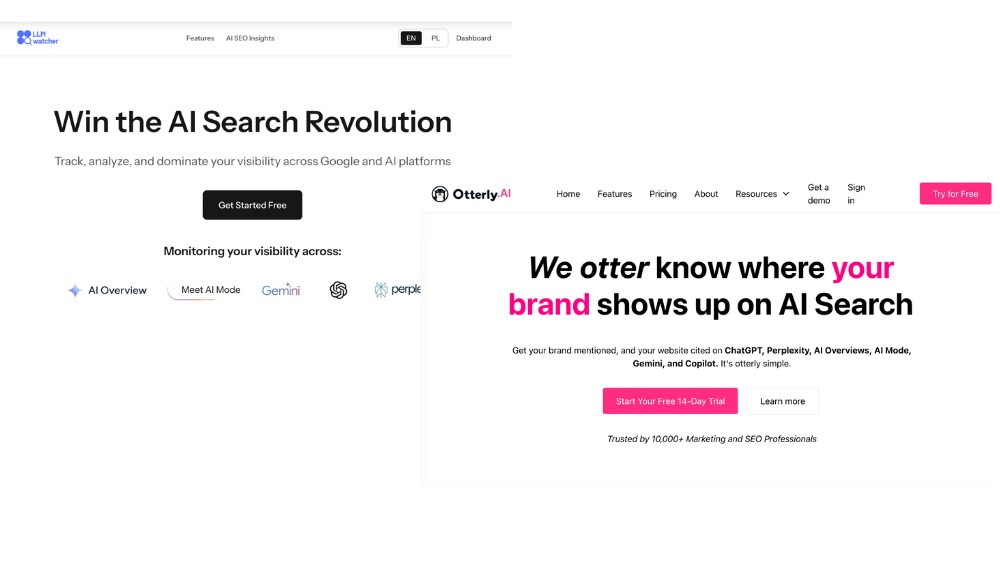
This is the first and most important function of LLMwatcher tool.
Instead of solely focusing on short-tail keywords, brands should prioritize long-tail, interrogative phrases (e.g., "What is the best way to [X] for [Y]?" or "How does [Product A] compare to [Product B]?"). Conversational search queries now account for over 50% of all online searches, a trend significantly amplified by the rise of AI assistants. Brands can uncover these queries by deep-diving into "People Also Ask" (PAA) sections in traditional search, analyzing customer service chat logs, forum discussions, and even transcribing user interviews to capture authentic language patterns.
Once these conversational queries are identified, content must be structured to provide immediate, definitive answers. AI models prioritize content that directly addresses the user's question without preamble, much like a helpful expert would. This means adopting an "answer-first" content strategy where the most critical information or solution is presented at the very beginning of a section or paragraph.
AI models are designed for efficiency; they seek the shortest path to a relevant, verifiable answer. Content that buries the lead will often be overlooked in favor of more direct sources.
Understanding the intent behind AI queries is paramount, moving beyond surface-level keywords to address the underlying need or problem. AI models are highly sophisticated at inferring user intent – whether the user is seeking information, comparing products, troubleshooting an issue, or looking for a local service.
For example, a query like "best running shoes for flat feet" implies an intent for specific product recommendations, detailed reviews, and perhaps even comparisons, rather than just a general definition of running shoes.
Content should anticipate these deeper needs, providing comparative data, pros and cons, usage scenarios, and clear calls to action where appropriate.
Furthermore, crafting content for AI visibility requires a commitment to clarity, conciseness, and definitive statements. Avoid ambiguous language, vague assertions, or overly promotional phrasing that can confuse AI's factual extraction capabilities.
Good to remember
For brands, the actionable insights derive from this understanding: cultivating a robust online authority, ensuring content clarity and factual accuracy, and strategically leveraging structured data. Optimizing existing website content for AI consumption means moving beyond traditional SEO to focus on unambiguous language, verifiable claims, and a consistent, credible online reputation across all digital channels.
It’s also about crafting content that directly addresses common AI queries and user intent within your niche, essentially pre-answering the questions AI models are likely to encounter.
This proactive content strategy, coupled with the meticulous implementation of schema markup, provides AI with easily digestible, contextually rich data, significantly improving its ability to parse and synthesize your brand's information. Brands adopting an "answer-first" content strategy see a 30% higher engagement rate from AI models [AEO Insights].

Paweł Jóźwik
Paweł Jóźwik – CEO of Traffic Trends | E-commerce, AI, and Sales Growth Expert
President of the Board at Traffic Trends, an agency he has successfully positioned as a leader in performance marketing for e-commerce for over a decade. His mission is to support online stores in achieving measurable sales growth through advanced marketing strategies.
A computer scientist by education from the Poznan University of Technology, Paweł possesses a deep understanding of both the technical foundations of e-commerce and the commercial aspects of running an online business. He gained his experience building online stores from scratch, and today, as the head of a leading agency, he has a direct impact on the sales success of dozens of companies.
He is passionate about new technologies, with a particular focus on the impact of artificial intelligence and LLM models on marketing and search engines. He actively researches how companies can adapt their strategies to the new reality dominated by AI. He is the creator and originator of tools such as LLMWatcher, which monitors brand presence in AI-generated answers.
He is a regular speaker, hosts webinars, and publishes in industry media, sharing practical knowledge on the future of SEO, web analytics, and "Agentic Commerce."
Related Articles